How old do cats have to be to get fixed is one of the first practical questions a new kitten owner has to answer, and the honest reply is that most cats can be safely spayed or neutered from around eight weeks of age, with five months being the sweet spot most veterinarians aim for. I have walked a lot of nervous owners through this decision, and the part that surprises them is how much flexibility there actually is. There is a recommended window, yes, but there is no single magic birthday after which the surgery suddenly becomes safe. What matters more is your kitten’s weight, overall health, and the plan you make with your own veterinarian.
Below I will lay out the real age ranges, the reasoning behind the “fix by five months” guidance, the health and behavior payoffs, what the surgery and recovery actually involve, what it tends to cost, and the warning signs that should send you to a clinic. My goal is to give you the full picture so you can book the appointment feeling informed rather than anxious.
The Short Answer: What Age Is Right for Spaying or Neutering
For a healthy kitten, the generally accepted window opens at about six to eight weeks of age and the most commonly recommended target is around five months, before a female has her first heat cycle. The reason five months gets singled out is the “Feline Fix by Five Months” initiative, which is supported by major veterinary bodies and aims to prevent that first litter while keeping the surgery low-risk.
Here is the nuance that the quick online answers skip. Kittens can reach sexual maturity startlingly early. A female may go into her first heat as young as four months, and males can father litters not long after. So waiting until “six months, just to be safe” can mean waiting too long and ending up with an accidental pregnancy. If you are unsure, err toward the earlier end of the range and ask your vet to confirm your kitten is heavy enough for anesthesia, which is usually around two pounds.
And if you have adopted an adult or even a senior cat that was never fixed, take a breath: it is almost never too late. Spaying and neutering can be done at nearly any age as long as the cat is healthy, and many older cats sail through the procedure with a thorough pre-surgical workup.
Why Five Months Became the Recommended Target

The older default of “wait until six months” was more habit than science. As the Cornell Feline Health Center notes, there is little evidence that any one specific age within the early months is uniquely best, which gives families real room to plan around the cat rather than around a rigid calendar date.
The five-month target threads a useful needle. It is late enough that a kitten is robust and easy to anesthetize, and early enough to beat the first heat in most females. Beating that first heat is the single biggest reason timing matters, because the protective effect against mammary cancer is strongest when the spay happens before any heat cycles occur. Wait a few cycles and that protection drops sharply.
Does breed change the timing?
For cats, breed plays a much smaller role in spay/neuter timing than it does in large-breed dogs, where some owners delay surgery for joint development. The vast majority of domestic cats, mixed or purebred, follow the same early-months guidance. If you own a breed your veterinarian considers slow to mature, that is a conversation worth having, but it is the exception, not the rule.
The Real Health Benefits, Backed by the Numbers
The case for fixing your cat is not just about preventing kittens, though that alone is a strong reason given how many cats already wait in shelters. The medical upside is concrete.
For females, spaying before the first heat cuts the lifetime risk of mammary (breast) cancer dramatically. Mammary tumors are among the most common and most aggressive cancers in intact female cats, so this is not a small benefit. Spaying also eliminates the risk of pyometra, a life-threatening uterine infection, and removes the chance of ovarian and uterine cancers entirely. The VCA Hospitals overview of spaying in cats describes the surgery as a major but low-complication procedure with a strong protective payoff.
For males, neutering removes the risk of testicular cancer and lowers the odds of certain prostate problems. It also sharply reduces the hormone-driven urge to roam, which is a quiet lifesaver, because intact toms that wander are far more likely to be hit by cars or to get into fights that transmit serious diseases like FIV and FeLV through bite wounds.
Behavior Changes You Can Expect
Plenty of owners book the surgery purely for the behavior payoff, and it is worth being clear-eyed about what fixing does and does not change.
Spraying and urine marking usually decrease, especially if you neuter before the habit becomes ingrained. The yowling, restlessness, and overly affectionate rolling that mark a female in heat go away. Roaming and territorial fighting drop in neutered males. What fixing will not do is rewrite your cat’s core personality or fix problems that are unrelated to hormones, such as litter box avoidance caused by a medical issue. If your cat’s behavior shifts suddenly or you see signs that point to illness rather than hormones, that deserves its own veterinary look rather than being chalked up to “they just need to be fixed.”
Age and Weight Readiness at a Glance
Use this as a planning reference, then confirm specifics with your clinic, because your veterinarian is assessing the individual cat in front of them, not a chart.
| Stage | Typical age | Notes |
|---|---|---|
| Pediatric / early | 6 to 8 weeks | Common in shelters; kitten usually needs to weigh about 2 lbs |
| Standard target | Around 5 months | The “fix by five months” goal; before first heat in most females |
| Traditional | 5 to 6 months | Older default; risks a first heat in early-maturing females |
| Adult / senior | Any age, if healthy | Often needs pre-surgical bloodwork; never too late |
Pediatric vs Traditional vs Adult Surgery: How to Choose
This is the section most quick guides leave out, and it is the one that actually helps you decide. Each timing window has trade-offs.
| Timing | Pros | Cons |
|---|---|---|
| Pediatric (6-8 wk) | Faster healing, smaller incision, guarantees no early litter | Tiny patients need careful anesthesia and warming; not every clinic offers it |
| Five months | Beats first heat, robust kitten, widely supported | Requires booking ahead so you do not drift past the heat window |
| Adult / senior | Still highly beneficial; stops ongoing risks immediately | Usually needs bloodwork; recovery can be a touch slower |
My practical take: if your clinic offers it and your kitten is heavy enough, the five-month target is the safest default for most pet homes. Shelters lean pediatric because they cannot risk adopting out an unfixed cat. Older cats should still be done, just with a more careful workup first.
What the Surgery and Recovery Actually Involve
Knowing the day-of and the week-after takes most of the fear out of this. Here is the realistic arc.
Before surgery
Your vet will likely ask you to withhold food for a set window before the appointment, often the evening before, to reduce anesthesia risk. Water rules vary by clinic, so follow their exact instructions. For adult and senior cats, expect pre-anesthetic bloodwork to check kidney and liver function and to flag hidden problems. If your cat has had unusual symptoms recently, mention them, since something like changes in urine or thirst can hint at an underlying issue your vet will want to investigate before anesthesia. Owners who have read up on conditions such as protein showing up in a cat’s urine often understand why that pre-op screening matters.
The day of
Most spays and neuters are same-day procedures. Neutering a male is quick and the incision is small. Spaying a female is a more involved abdominal surgery but still routine. Many cats go home within 12 to 24 hours, sometimes the same afternoon.
The first 48 hours
Expect grogginess from anesthesia. Offer a small amount of food and water once your cat is alert, keep them in a warm, quiet room, and limit jumping. A recovery collar or surgical suit keeps them from licking the incision, which is the most common cause of complications. Mild swelling around the site is normal; oozing, heavy bleeding, or a gaping incision is not.
Days three through fourteen
Activity should stay restricted for about two weeks. No rough play, no high perches, no baths. Check the incision twice a day. If your cat had external sutures, they typically come out around 7 to 10 days. By the two-week mark most cats are essentially back to normal.
What It Costs and Where to Find Help
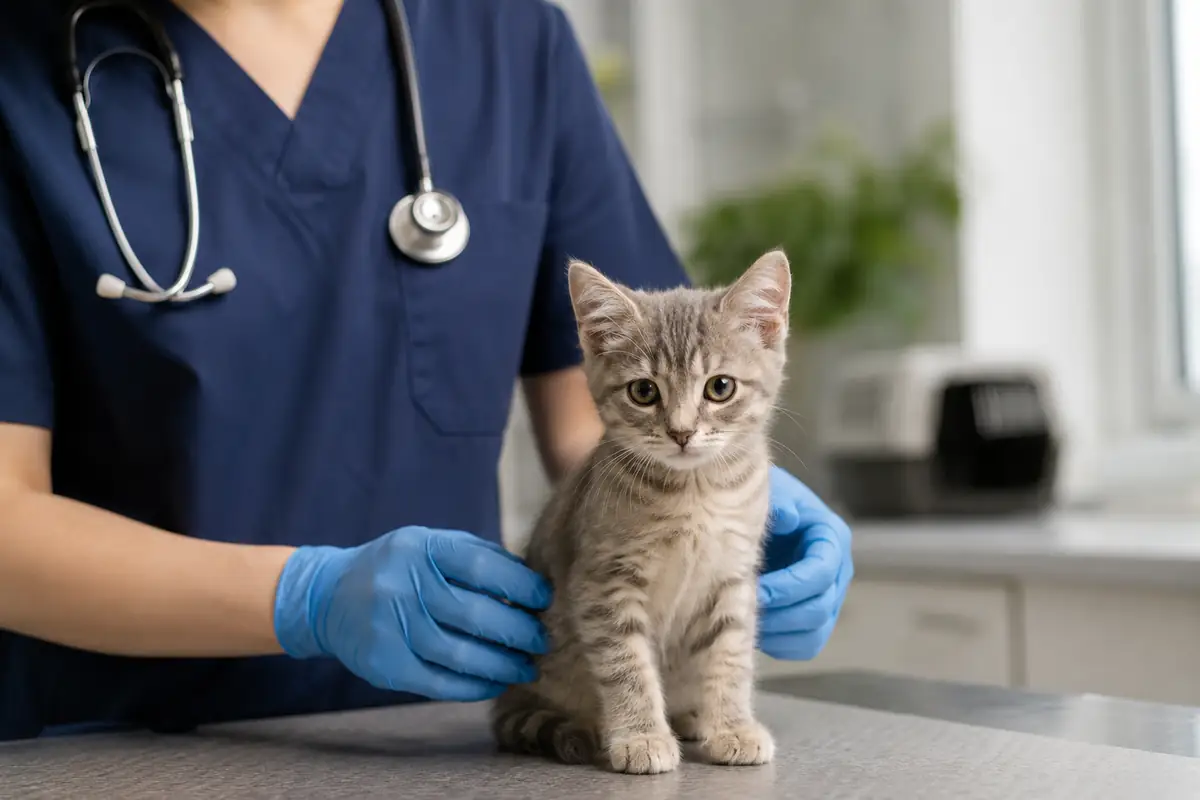
Cost is the other thing the quick guides dodge, so here is a candid range. At a full-service private veterinary clinic, a cat spay or neuter commonly runs anywhere from roughly 100 to 500 dollars or more, depending on your region, the cat’s age and size, and whether bloodwork or extras are included. Spays usually cost more than neuters because they are more involved.
If that range is a stretch, low-cost and nonprofit spay/neuter clinics exist in most areas and often charge a fraction of private-practice prices, sometimes 50 dollars or less. Many shelters, humane societies, and trap-neuter-return programs run vouchers or sliding-scale fees. The key point: cost should never be the reason a cat goes unfixed, because help is usually available if you ask. A quick call to your local shelter is the fastest way to find it.
Weight Management After Surgery
One real, well-documented effect of fixing your cat is a drop in metabolism, which means a fixed cat needs fewer calories than an intact one. If you keep feeding the same amount, weight gain creeps in. This is not a reason to avoid the surgery; it is a reason to adjust the food bowl. Talk to your vet about switching portions or to a formula made for spayed and neutered cats, and keep an eye on body condition. Preventing post-surgery weight gain protects your cat from a long list of downstream problems, including diabetes and joint strain.
Common Myths That Push Owners to Wait Too Long
A surprising number of delays come down to ideas that sound reasonable but do not hold up. Let me walk through the ones I hear most, because believing them can cost your cat the protective benefits of early timing.
The first myth is that a female should have one litter “to settle her down” or for her health. There is no evidence behind this. A litter does not improve temperament, and it removes the strongest window for cancer protection. The second myth is that fixing a male will make him fat and lazy. The metabolism does slow, but weight gain is entirely manageable with the right portions, and the calm you may notice is the absence of frantic mating drive, not lethargy. The third myth is that indoor-only cats do not need to be fixed because they cannot reproduce. Indoor cats still face the same heat-related yowling, spraying, and the same cancer and infection risks, so the medical case applies just as strongly. The fourth is that the surgery is dangerous. With modern anesthesia and monitoring, spay and neuter procedures are among the most routine surgeries performed, with very low complication rates in healthy patients.
The last myth worth busting is that there is a hard cutoff age after which fixing is pointless. There is not. An older cat that gets spayed still loses its risk of pyometra and uterine cancer the moment the surgery is done, and a neutered senior tom still gives up the urge to roam. The benefits start the day of surgery regardless of age.
How to Prepare Your Home Before and After
A little setup makes recovery smoother for both of you. Before you leave for the appointment, pick a small, quiet room where your cat can rest without stairs, high furniture, or other pets bothering them. Lay down soft bedding that you will not mind washing, since you want to keep the incision clean. Stock the recovery collar or a surgical recovery suit ahead of time so you are not scrambling once you get home with a groggy cat.
Set the litter box close by, and for the first few days consider switching to a dust-free, paper-based litter, because clay dust can cling to a fresh incision. Keep food and water low and easy to reach so your cat does not have to jump. Plan to be home, or to have someone check in, for at least the first 24 hours so you can watch how they wake up from anesthesia and make sure they are eating, drinking, and using the box normally.
One more tip from experience: keep other household cats separated for a day or two if they tend to wrestle. A playful housemate pouncing on a sore patient is a common reason incisions reopen. Calm and boring is exactly what you want during recovery.
Warning Signs After Surgery: When to Call the Vet
Most recoveries are uneventful, but you are the monitor at home, so know the red flags. Call your veterinarian promptly if you see persistent vomiting, refusal to eat for more than about 24 hours, lethargy that does not lift after the first day, heavy or ongoing bleeding from the incision, a swollen or open wound, pus or a foul smell, pale gums, labored breathing, or signs of significant pain such as hiding, crying, or aggression when touched. A cat that seems systemically unwell rather than just sleepy needs to be seen. When something feels off and you are weighing whether a symptom is serious, conditions like feline hyperthyroidism and other health changes are a reminder that subtle shifts are worth a professional opinion rather than a wait-and-see at home.
Frequently Asked Questions
How old do cats have to be to get fixed at the earliest?
Healthy kittens can typically be fixed from about six to eight weeks of age, provided they weigh roughly two pounds. This pediatric timing is common in shelters. For pet homes, around five months is the more usual recommendation.
Is it too late to fix an older cat?
No. Spaying and neutering can be done safely at almost any age as long as the cat is healthy. Older cats usually need pre-surgical bloodwork first, but the procedure still delivers real health and behavior benefits.
Should I let my female cat have one heat or litter first?
Veterinary guidance does not support waiting. Spaying before the first heat gives the strongest protection against mammary cancer, and there is no proven health benefit to allowing a heat or a litter beforehand.
How long does recovery take?
Most cats are back to normal within about two weeks. Keep activity restricted, prevent licking of the incision with a collar or suit, and check the site daily during that window.
Will fixing my cat change its personality?
It reduces hormone-driven behaviors like spraying, roaming, and heat-related yowling, but it does not erase your cat’s core personality. Affection, playfulness, and temperament generally stay the same.
Why does my cat need to fast before the surgery?
Fasting lowers the chance of vomiting under anesthesia, which can be dangerous. Follow your clinic’s exact food and water instructions, since the timing varies between practices and by the cat’s age.
Bottom Line
Most cats can be fixed from around eight weeks old, and aiming for roughly five months gives you the best balance of safety and timing for the average pet. The protection against cancer, infection, accidental litters, and risky roaming is well worth a routine procedure, and an older or rescued cat is rarely too old to benefit. The single most useful step you can take is a short conversation with your veterinarian, who can weigh your individual cat’s weight, age, and health and book the appointment with confidence. This article is general guidance, not a substitute for that personalized veterinary advice.