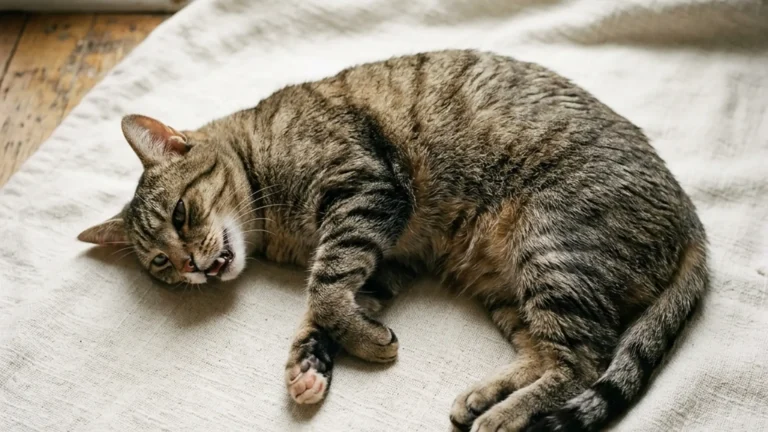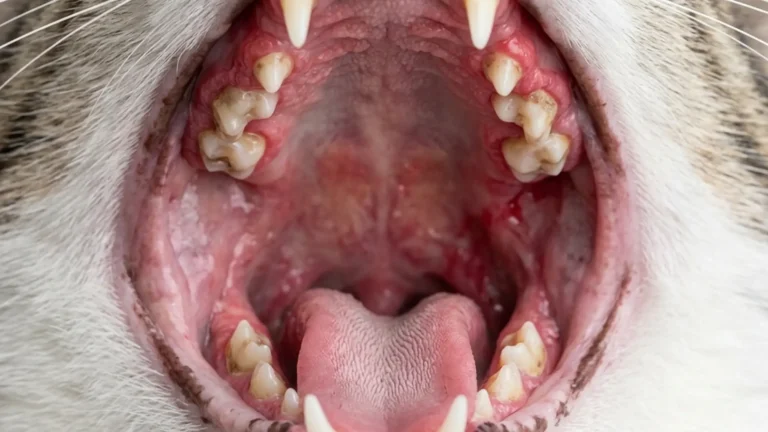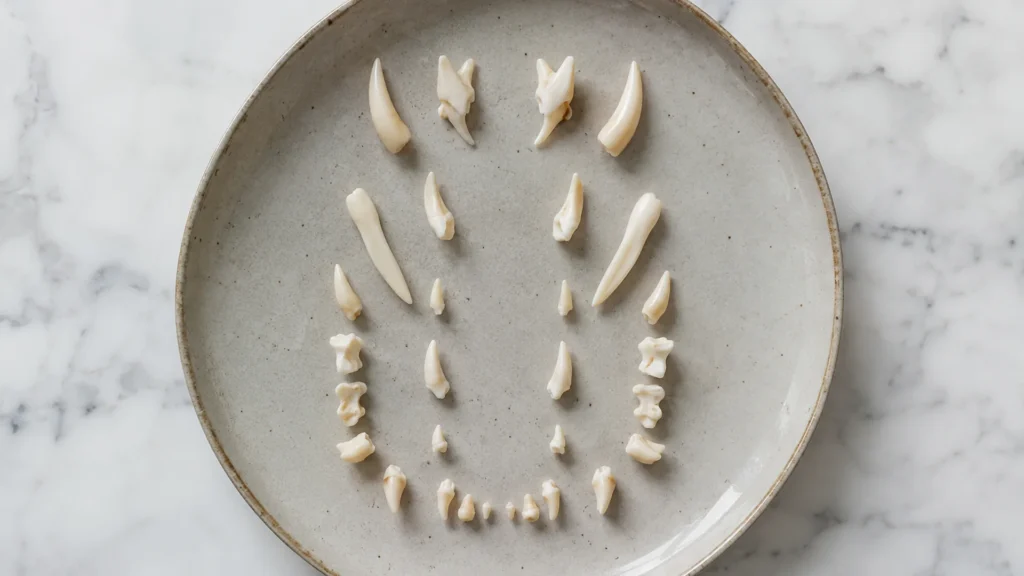
How many teeth do cats have is a question with a tidy headline answer and a much more interesting story underneath it: an adult cat has 30 permanent teeth, while a kitten starts life with 26 baby teeth that fall out and get replaced by around six to seven months of age. Those numbers come up constantly in my conversations with owners, usually because someone found a tiny tooth on the carpet and panicked, or because a cat suddenly started dropping food. The count itself is easy to memorize. What actually keeps cats comfortable is understanding what those teeth do, how they develop, and the dental problems that quietly affect a huge share of cats as they age.
This guide covers the full picture: the exact breakdown of feline teeth by type, the kitten-to-adult teething timeline, the eruption sequence most articles skip, the most common dental diseases including tooth resorption, what professional cleanings involve and cost, how to care for your cat’s mouth at home, and the warning signs that mean it is time to call your veterinarian.
The Numbers: Kitten Teeth vs Adult Teeth
An adult cat has 30 permanent teeth. A kitten has 26 deciduous (baby) teeth. The jump from 26 to 30 happens because kittens are born without molars, and those four molars only come in with the adult set.
Here is the adult breakdown by type:
- 12 incisors – the small teeth at the front, six on top and six on the bottom.
- 4 canines – the long fangs, one in each corner.
- 10 premolars – the cheek teeth used for shearing and crunching.
- 4 molars – the rearmost teeth, present only in adults.
The kitten set is the same minus the molars: 12 incisors, 4 canines, and 10 premolars, which adds up to 26.
Why the upper and lower jaws are not symmetrical
A detail that trips people up: the upper and lower jaws do not hold the same number of teeth. An adult cat has 16 teeth on top and 14 on the bottom. The difference comes from the premolars, since each side of the upper jaw has three premolars while each side of the lower jaw has only two. So if you ever try to count and the math feels off, that asymmetry is normal, not a missing tooth.
What Each Type of Tooth Actually Does
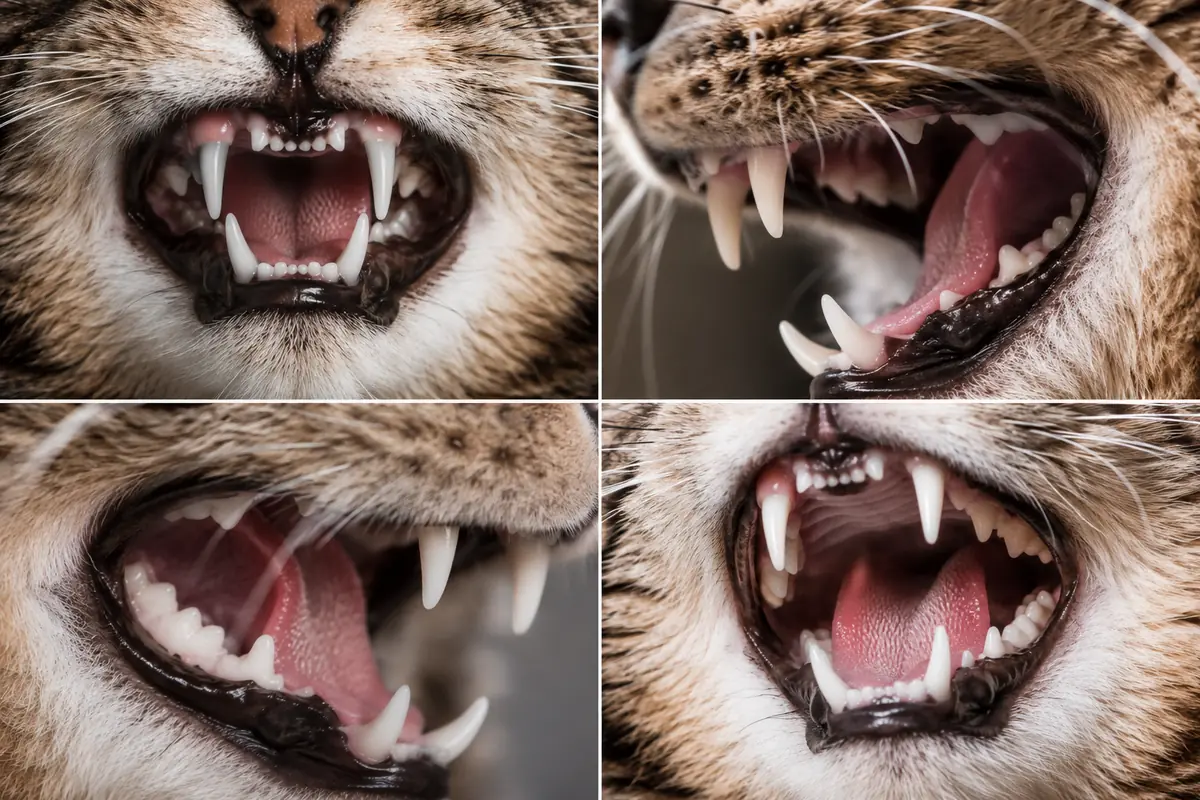
Cats are obligate carnivores, and their teeth are built for catching and processing prey rather than grinding plant matter. That design explains why a cat’s mouth looks and works so differently from ours.
The tiny incisors handle delicate work: nibbling meat off bone and grooming, which is why a cat uses its front teeth like a comb when it cleans itself. The canines are the dramatic fangs, used to grab and hold prey and, in the wild, to deliver a killing bite. The premolars and molars are not flat grinding surfaces like human molars; they are bladed and interlock in a scissor-like action called the carnassial bite, perfect for slicing chunks of meat small enough to swallow. Cats do very little actual chewing, which is one reason dry food is not the dental cure-all many owners assume it is.
The Full Teething Timeline and Eruption Sequence
Most quick guides give a vague “baby teeth come in, then adult teeth replace them.” Here is the detailed schedule, which is genuinely useful when you are trying to figure out how old a stray kitten is or whether a tooth coming loose is normal.
| Age | What is happening |
|---|---|
| Birth | No visible teeth |
| 2 to 4 weeks | Baby incisors emerge first |
| 3 to 4 weeks | Baby canines come in |
| 4 to 6 weeks | Baby premolars appear; full set of 26 by about 6-8 weeks |
| 3 to 4 months | Permanent incisors start replacing baby teeth |
| 4 to 6 months | Permanent canines, premolars, and molars erupt |
| 6 to 7 months | Full adult set of 30 teeth in place |
During teething, you may notice your kitten drooling, chewing more than usual, eating slowly, or having slightly off breath. Finding a small tooth or a fleck of blood on a toy is normal. Kittens often swallow their baby teeth, so do not worry if you never find them.
Retained Baby Teeth: When a Tooth Will Not Leave
Occasionally a baby tooth does not fall out when the permanent tooth comes in underneath it. This is called a retained deciduous tooth, and it most often involves the canines. The problem is crowding: two teeth in one socket trap food and bacteria, which speeds up gum disease and can push the adult tooth into the wrong position.
If you spot what looks like a double set of fangs in a kitten around five to six months old, mention it at the next visit. Vets usually remove retained baby teeth, often during the spay or neuter appointment so the cat only goes under anesthesia once. Catching it early prevents a lifetime of bite and gum trouble.
Feline Tooth Resorption: The Common Problem Owners Miss
This is the section that sets a real dental guide apart, because tooth resorption is one of the most common and most painful feline dental conditions, and it rarely shows up in the quick “how many teeth” articles. In tooth resorption, the body’s own cells gradually break down the structure of a tooth from the inside out until it is destroyed. According to the Cornell Feline Health Center, it affects an estimated 20 to 60 percent of all cats and close to three-quarters of cats aged five and older.
The hard part is that cats hide pain well. Signs can be subtle: dropping food, chewing on one side, swallowing kibble whole, preferring soft food, head tilting while eating, or flinching when the mouth is touched. The cause is still not fully understood, so there is no proven prevention, and the only effective treatment is extracting the affected teeth. This is exactly why routine dental checkups, often with x-rays, matter so much; resorptive lesions frequently hide below the gumline where you cannot see them.
The Bigger Picture: Dental Disease in Cats
Tooth resorption is one piece of a larger reality. More than half of cats over the age of three have some form of dental disease, and the share climbs with age. The main culprits are gingivitis (inflamed gums from plaque), periodontal disease (progressive infection of the structures holding teeth in place), and in some cats stomatitis, a severe inflammation of the mouth.
The VCA Hospitals overview of dental disease in cats notes that many affected cats show no obvious signs, which is why professional oral exams are so important. Watch for bad breath, drooling that may be tinged with blood, pawing at the mouth, dropping food, and a sudden finicky appetite. Untreated dental disease is not just a mouth problem; the chronic infection can affect overall health. Owners who track other feline conditions, such as feline hyperthyroidism and its effects on appetite, already know that changes in eating habits deserve attention rather than a shrug.
How Many Teeth Compared to Dogs and Humans
Putting the count in context helps it stick. A bit of perspective:
| Species | Adult teeth | Baby teeth |
|---|---|---|
| Cat | 30 | 26 |
| Dog | 42 | 28 |
| Human | 32 | 20 |
Cats have fewer teeth than dogs because their diet is more strictly carnivorous; they do not need the broad grinding surface a more omnivorous dog uses. Fewer teeth, sharper teeth, built for a hunter.
Professional Dental Cleanings: What They Involve and Cost
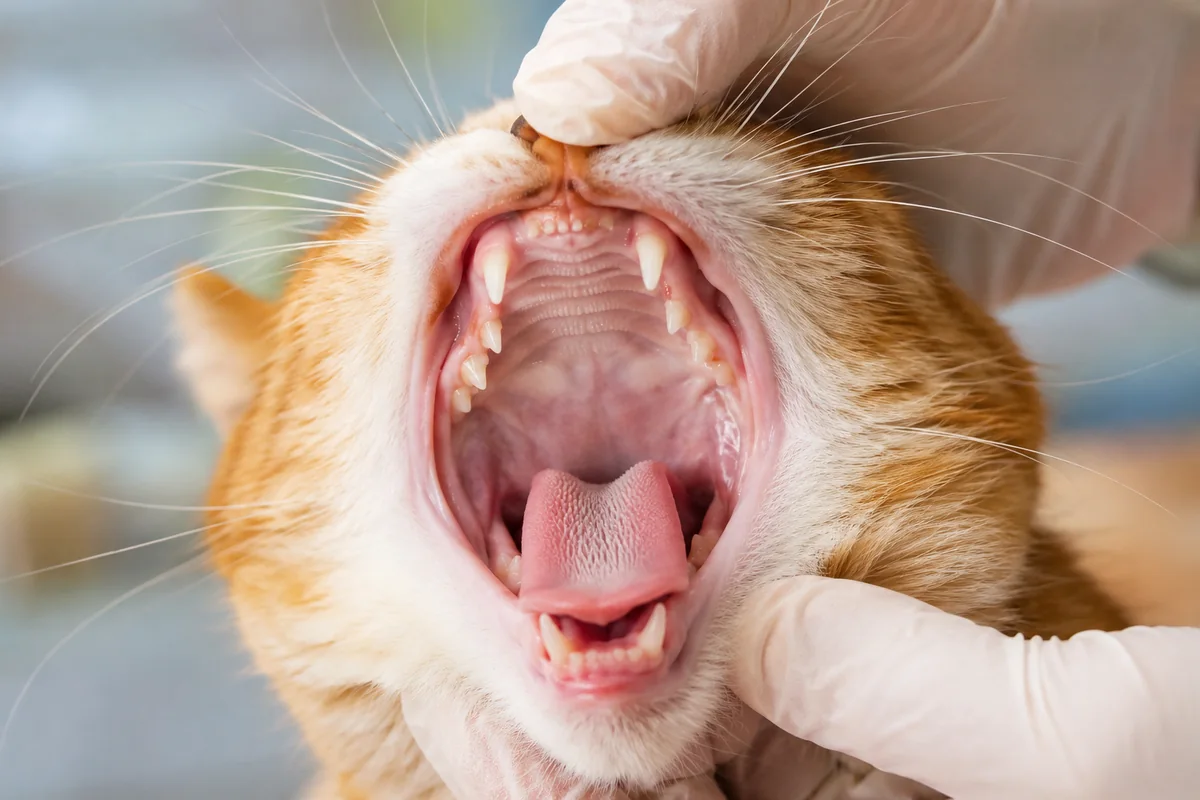
A proper feline dental cleaning is not the same as a quick scrape at home. It is done under general anesthesia, which lets the vet examine every tooth, probe below the gumline, take x-rays, scale away tartar, polish the teeth, and extract any that are diseased. Anesthesia sounds scary but it is what makes a thorough, pain-free cleaning possible, since no cat will hold still for dental x-rays awake.
Cost varies widely by region and by how much work is needed. A routine cleaning with exam often runs in the few-hundred-dollar range, while a visit that includes x-rays, bloodwork, and several extractions can climb well beyond that. It is worth asking your clinic for an estimate that separates the baseline cleaning from likely extractions, because the final bill depends heavily on what they find once your cat is under. Skipping cleanings to save money usually backfires, since advanced dental disease is more painful and more expensive to fix later. Pre-anesthetic bloodwork is standard before a dental, much as it is before other procedures, because it can flag underlying issues; the same screening that catches things like elevated protein in a cat’s urine helps your vet confirm anesthesia is safe.
Home Dental Care That Actually Helps
The single best thing you can do between vet visits is brush your cat’s teeth with a pet-safe toothpaste, ideally daily, using a soft finger brush or a small cat toothbrush. Never use human toothpaste, which contains ingredients that are unsafe for cats to swallow. Introduce brushing slowly, with patience and rewards, starting in kittenhood if you can.
Beyond brushing, dental diets, water additives, and treats carried by the Veterinary Oral Health Council can help reduce plaque, though they do not replace brushing or professional cleanings. One firm warning: do not try to scrape tartar off your cat’s teeth yourself with metal tools, because it damages the enamel and makes things worse. When in doubt, let your veterinarian handle the hardware.
What If My Cat Has More or Fewer Than 30 Teeth
Counting your cat’s teeth at home is harder than it sounds, since cats rarely cooperate with a full mouth inspection, but the question of an off count comes up often enough to address directly. Occasionally a cat genuinely has an extra tooth, called a supernumerary tooth. This happens when an extra tooth bud forms during development, and it is more common with the incisors and premolars. An extra tooth is not automatically a problem, but it can cause crowding, which traps plaque and food and raises the risk of gum disease in that crowded area. Your veterinarian decides on a case-by-case basis whether an extra tooth should be removed.
Far more often, an owner counts fewer than 30 teeth. Sometimes a tooth never developed in the first place, which is harmless. More commonly, a tooth was lost to disease, fractured, or was extracted at a previous cleaning you may not have known the full details of, especially with an adopted cat. A missing tooth in an adult cat is worth noting in the medical record, because the gap it leaves can shift neighboring teeth and the empty socket should be checked to make sure it healed cleanly. None of this requires panic; it is simply information your vet uses to keep the rest of the mouth healthy.
If you ever feel a tooth that is loose, wobbly, or discolored, do not try to remove it yourself. A loose adult tooth signals advanced disease underneath, and pulling at it can cause pain, bleeding, and a fractured root left behind in the gum. That is a job for a veterinarian working under anesthesia, where the whole tooth and root can be removed cleanly and the site treated.
How Diet and Chewing Affect Feline Teeth
A widespread belief is that dry kibble cleans a cat’s teeth the way a crunchy snack might scrub our own. The reality is more limited. Because cats shear rather than grind, and because most kibble shatters on first contact, ordinary dry food does little meaningful scrubbing along the gumline where disease starts. That does not make dry food bad; it just means you should not rely on it as a dental strategy.
Some products are designed specifically for dental benefit. Dental diets use larger, fibrous kibble engineered so the tooth sinks into the piece before it breaks, wiping the surface as it goes. Certain treats and chews carry a seal from the Veterinary Oral Health Council, which indicates they have been tested to reduce plaque or tartar. These can be a helpful supplement, particularly for cats that refuse tooth brushing, but they work best alongside brushing and professional care rather than instead of it.
Wet food, contrary to another myth, does not doom a cat to bad teeth. Plenty of cats on wet diets have excellent dental health because their owners brush and keep up with cleanings, while plenty of kibble-fed cats develop severe disease. The diet matters less than the daily care. If your cat tolerates only one form of dental support, consistent brushing with a pet-safe paste will do more good than any single food choice. When you are unsure which products are worth the money, your veterinary team can point you to options that have actually been tested rather than just marketed.
Frequently Asked Questions
How many teeth do cats have as adults?
Adult cats have 30 permanent teeth: 12 incisors, 4 canines, 10 premolars, and 4 molars. There are 16 teeth on the upper jaw and 14 on the lower jaw.
How many teeth do kittens have?
Kittens have 26 baby (deciduous) teeth: 12 incisors, 4 canines, and 10 premolars. They have no molars until the adult teeth come in around six to seven months of age.
At what age do cats lose their baby teeth?
Kittens begin losing baby teeth around three to four months old, and the full adult set is usually in place by six to seven months. It is normal to find tiny teeth or to never find them at all, since kittens often swallow them.
Is it normal for my kitten to have two fangs in the same spot?
That can be a retained baby tooth that did not fall out as the adult tooth erupted. It causes crowding and gum problems, so have your veterinarian check it. Retained teeth are often removed during the spay or neuter surgery.
Can cats live a normal life with missing teeth?
Yes. Many cats do very well after extractions, even multiple ones, and often eat more comfortably because the painful teeth are gone. Most cats manage dry and wet food fine without certain teeth.
How do I know if my cat has a dental problem?
Watch for bad breath, drooling, dropping food, chewing on one side, pawing at the mouth, or a sudden change in appetite. Because cats hide pain, regular veterinary dental exams are the most reliable way to catch problems early.
Bottom Line
Cats have 30 adult teeth and 26 baby teeth, and the swap happens over the first six to seven months of life. The count is the easy part. The part that protects your cat is paying attention to its mouth: brushing at home, scheduling professional cleanings, and watching for the quiet signs of dental disease and tooth resorption that affect so many cats as they age. If your cat shows any change in how it eats or any sign of mouth pain, a veterinary exam is the right next step. This article is general information and does not replace advice from your own veterinarian.