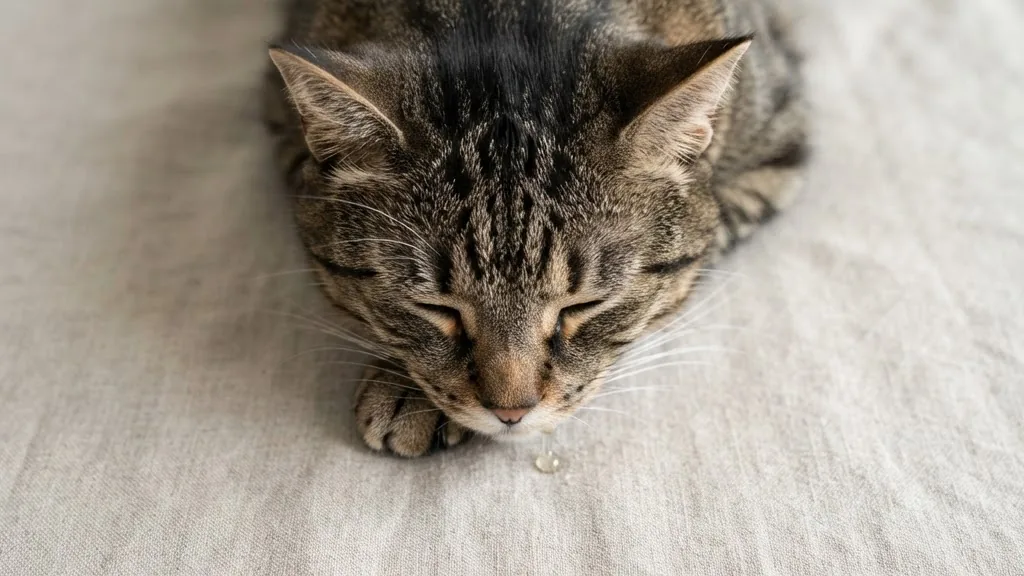
Cat drooling sits in a confusing middle ground. A little spit while your cat purrs on your lap is usually nothing, but a sudden stream of saliva, or drool paired with a bad smell or a dropped appetite, can be the first sign of a real problem. Knowing which is which keeps you from panicking over a happy drooler and, just as important, from ignoring a cat that needs a vet.
This guide explains what drooling actually is, the seven most common causes from harmless to urgent, the red flags that mean act now, and what you can safely do at home before a veterinary visit. It is educational and is not a substitute for advice from your own veterinarian, who can examine your cat and reach a diagnosis.
What drooling actually is
Drooling, known medically as ptyalism or hypersalivation, happens when a cat either makes too much saliva or cannot swallow saliva normally. The Cornell Feline Health Center notes that feline oral and dental problems are among the most common health issues vets see, and the mouth is closely tied to this symptom. Both routes end the same way, with spit escaping the mouth, but the underlying reasons differ. Excess production often points to nausea or a bitter taste, while a swallowing problem usually points to something painful or obstructive in the mouth or throat.
Cats are generally tidy, low-drool animals compared with dogs, so visible saliva stands out more in a cat. That is actually useful: because feline drooling is less common, a new or heavy drool is more likely to mean something and is worth paying attention to rather than dismissing.
Normal drooling versus a warning sign
Some drooling is perfectly benign. The trick is reading the context.
- Likely normal: a small amount of drool while your cat is deeply relaxed, purring, kneading, or being petted. Some content cats drool a little the way some people tear up when happy.
- Likely a warning sign: drool that is new, heavy, constant, or recurring daily, especially if it lasts more than a few minutes at a time or comes with any other symptom.
The single most useful question is “is this new?” A cat that has happily dribbled during cuddles for years is different from a cat that suddenly starts drooling this week. New and persistent drooling earns a closer look.
This table sorts the situations by urgency so you can place your cat quickly.
| Situation | What it looks like | Action |
|---|---|---|
| Likely normal | A little drool while purring, kneading, or being petted; mild and occasional | Monitor, no action needed |
| See a vet within 24 hours | Drool plus bad breath, reduced appetite, weight loss, pawing at mouth, or pink saliva | Book a prompt appointment |
| Emergency now | Drool plus trouble breathing, collapse, a known toxin, or a string under the tongue | Go to an emergency vet immediately |
The 7 main causes of cat drooling
Here are the causes worth knowing, roughly from most common to most urgent.
- Dental and mouth disease. This is the leading cause. Gingivitis, the severe gum inflammation called stomatitis, tooth resorption, and broken teeth all cause pain and excess saliva. Dental disease is extremely common; it affects a majority of cats by the age of 3, which is why the mouth is the first place a vet looks. Our guide to stomatitis in cats covers one of the most painful versions.
- Nausea and internal illness. Many conditions cause nausea, and nausea causes drooling. As veterinary references on feline drooling describe, gastrointestinal upset, pancreatitis, kidney disease, and liver disease can all show up partly as hypersalivation.
- Oral injury or a foreign body. A cut, a burn, or something stuck, classically a strand of string or thread caught under the tongue, triggers heavy drooling. A string under the tongue is a genuine emergency because it can damage the intestines.
- Toxins and bitter substances. Many poisons and even bitter-tasting medications cause sudden, foamy drooling, sometimes within minutes. Lilies and certain houseplants are common feline toxins, and the ASPCA maintains guidance on substances dangerous to cats.
- Heatstroke. Cats can overheat, and drooling is one sign. Risk climbs sharply once the environment passes about 90 degrees Fahrenheit, or roughly 32 degrees Celsius, especially without shade and water.
- Stress, fear, or motion sickness. A trip to the vet, a car ride, or a frightening event can bring on temporary drooling that resolves once the cat calms down.
- Oral tumors or growths. Less common but serious, masses in the mouth interfere with swallowing and cause drool, often with bad breath or bleeding. These are more likely in older cats.
What the type of drool can tell you
Beyond how much your cat drools, the character of the saliva offers clues that are useful to note for the vet.
- Clear and watery. The most common type, seen with nausea, stress, a bitter taste, or contentment. On its own it is the least alarming, but volume and context still matter.
- Thick, ropey, or foamy. Often points to nausea or a toxin. Foaming after contact with a plant, chemical, or bitter medication suggests something irritated the mouth.
- Blood-tinged or pink. A warning sign. Blood in the saliva suggests a mouth injury, advanced dental disease, or a growth, and warrants a prompt exam.
- Foul-smelling. A strong odor usually signals dental disease or infection. Healthy cat saliva should not stink, so a bad smell is a meaningful symptom rather than a quirk.
You do not need to diagnose from the drool yourself, but describing its look and smell to your veterinarian helps narrow the cause faster, and it is information a phone triage nurse will often ask for.
How long to watch before acting
Owners often ask how long is safe to wait. A reasonable rule of thumb, assuming none of the emergency red flags are present, is this. A single brief episode of mild drooling tied to an obvious trigger, such as a stressful car ride that then ends, can be watched. Drooling that is still happening after a few hours with no clear trigger, or that recurs over more than a day, should prompt a call to your vet.
For any cat that also stops eating, the clock speeds up. Cats that do not eat for more than about 24 to 48 hours are at risk of a serious liver problem called hepatic lipidosis, so appetite loss alongside drooling is never something to sit on for days. When in doubt, a phone call to the clinic costs nothing and lets a professional decide whether your cat needs to be seen. It is always better to ask early than to wait through a weekend hoping a painful mouth will fix itself.
Red flags that mean act now
Some combinations are emergencies. Seek urgent veterinary care immediately if drooling comes with any of these:
- Difficulty breathing, open-mouth breathing, or blue gums.
- Collapse, severe weakness, or unresponsiveness.
- Known or suspected toxin exposure, such as a chewed lily or a household chemical.
- A string or thread visible at the mouth or under the tongue. Do not pull it; get to a vet.
- Sudden, severe distress, pawing frantically at the mouth, or signs of choking.
When breathing or a toxin is involved, minutes matter. Call your nearest emergency veterinary clinic on the way rather than waiting to see if it passes.
See a vet within 24 hours if…
Short of an outright emergency, several signs still warrant a prompt visit, ideally within 24 hours. Arrange one if the drooling comes with:
- Bad breath or a foul odor from the mouth.
- Reduced appetite or refusing food, or eating on only one side.
- Weight loss over recent weeks.
- Pawing at the mouth or face rubbing.
- Blood in the saliva or pink-tinged drool.
- Trouble chewing, dropping food, or obvious mouth pain.
These point toward dental disease or another treatable problem that will only get more painful and more expensive the longer it waits.
What to do at home right now
While you arrange care, a few sensible steps help without putting you or your cat at risk.
- Observe and note. When did it start, how much, and what else is different? Appetite, energy, litter-box habits, and breathing are all worth recording for the vet.
- Look in the mouth only if it is safe. A calm cat may let you gently lift a lip. Never force it, and never reach into the mouth of a distressed cat. If you see a string under the tongue, do not pull it.
- Remove access to toxins. Clear away plants, chemicals, and chewed items, and save any packaging to show the vet.
- Cool an overheated cat gently. Move to shade or air conditioning and offer water, but do not use ice-cold water.
- Do not give human medication. Many common painkillers are toxic to cats. Wait for veterinary guidance on anything you give by mouth.
If your cat is also vomiting or refusing food, treat it as more urgent; persistent vomiting in cats can escalate quickly, and our piece on cat dental anatomy helps you understand what the vet will be checking.
How the vet finds the cause
Because the mouth is painful to examine in a drooling cat, the vet often needs sedation for a thorough oral exam. From there the workup is matched to the suspected cause.
- Oral exam and dental X-rays to find tooth resorption, fractured teeth, stomatitis, or a foreign body.
- Bloodwork to screen for kidney disease, liver disease, and other internal causes of nausea.
- Imaging if a mass, obstruction, or swallowed object is suspected.
Treatment follows the diagnosis: a professional dental cleaning and extractions for dental disease, anti-nausea care and treatment of the underlying illness for internal causes, removal of a foreign body, or decontamination for a toxin. The drool is a symptom; fixing the cause is what stops it.
Recovery depends on the cause. After a dental procedure, many cats are noticeably more comfortable within a few days and the drooling resolves once the painful teeth are gone, even in cats that have had several extractions. Cats are remarkably good at thriving with fewer teeth, so do not let the idea of extractions frighten you out of treatment; leaving painful teeth in place is worse for the cat than removing them. For nausea-driven drooling, the timeline tracks the underlying illness, which is why getting an accurate diagnosis matters more than chasing the symptom. Toxin cases are the most time-sensitive, and outcomes are far better when a cat is treated within the first hour or two of exposure rather than after symptoms have advanced. Across all of these, the consistent theme is that early action leads to easier, cheaper, and more successful treatment than waiting does.
How to prevent it
You cannot prevent every cause, but you can lower the odds of the most common ones.
- Stay on top of dental care. Regular veterinary dental checks, and home brushing if your cat tolerates it, catch problems before they hurt.
- Keep toxins out of reach. Remove lilies and other toxic plants from the home, and store chemicals securely.
- Book routine wellness exams. Yearly checkups, or twice yearly for senior cats, find kidney, liver, and dental issues early.
- Protect against heat. Provide shade, water, and a cool indoor space in hot weather, and never leave a cat in a parked car.
- Cat-proof for foreign bodies. Keep sewing thread, dental floss, ribbon, and small chewable objects out of reach, since string-type items under the tongue are both a common and a dangerous cause.
None of these steps guarantees your cat will never drool, but together they remove the most preventable causes and mean that if drooling does appear, it is more likely to be caught early at a routine exam rather than discovered as an emergency.
Drooling in kittens versus senior cats
Age shifts the odds on what is causing the drool, which is worth keeping in mind.
Kittens. A young kitten that drools may be teething, exploring with its mouth, or reacting to a bitter taste. Kittens lose their baby teeth and grow adult teeth over roughly the first 6 months of life, and mild drooling during that window can be minor. But kittens are also small and dehydrate fast, so any drooling kitten that stops eating, seems lethargic, or may have chewed something needs same-day veterinary attention. There is far less margin for a wait-and-see approach in a tiny animal.
Senior cats. In cats over about 10 years old, new drooling raises the priority of certain causes: advanced dental disease, kidney disease, and oral tumors all become more likely with age. A senior cat that begins drooling, especially with weight loss or appetite change, should be seen promptly rather than watched for weeks. Older cats also benefit from more frequent wellness exams, often twice a year, to catch these problems early.
Adult cats in their prime years sit in between, where dental disease and nausea lead the list. Whatever the age, the same red-flag rules apply; age simply nudges which cause is most probable.
Common myths about cat drooling
A few persistent beliefs cause owners to over- or under-react. Here is what the evidence supports.
- Myth: drooling always means rabies. Rabies is very rare in vaccinated indoor cats, and dental disease or nausea is a far more likely explanation. Rabies is serious but not the default cause of a drooling house cat.
- Myth: a happy drooler never needs a vet. Contentment drooling is real, but if the pattern changes, becomes heavy, or pairs with any other symptom, the “happy” label no longer applies.
- Myth: bad breath is normal for cats. Foul breath is usually a sign of dental disease, not a normal cat trait, and it often accompanies the drooling it helps explain.
- Myth: you can treat mouth pain with human painkillers. Many common human medications, including some sold over the counter, are toxic to cats even in small doses. Never medicate a cat without veterinary direction.
Clearing up these myths matters because the wrong assumption either sends an owner into needless panic or, worse, delays care for a treatable but painful problem.
Frequently asked questions
Is it normal for a cat to drool?
A small amount while deeply relaxed, purring, or being petted can be normal for some cats. New, heavy, or constant drooling, or any drooling with other symptoms, is not normal and should be checked.
When should I worry about my cat drooling?
Worry, and seek care within 24 hours, if drooling comes with bad breath, reduced appetite, weight loss, pawing at the mouth, blood in the saliva, or trouble chewing. Treat it as an emergency if there is difficulty breathing, collapse, a possible toxin, or a string under the tongue.
Can dental disease cause drooling?
Yes. Dental and mouth disease is the leading cause of drooling in cats, and it is very common, affecting most cats by age 3. Pain and inflammation in the mouth drive excess saliva.
Do cats drool when they are happy?
Some do. A relaxed, purring cat that kneads and dribbles a little during affection is usually drooling from contentment. The key is that it is mild, occasional, and not paired with any other symptom.
My cat is drooling and not eating. What should I do?
That combination warrants a prompt veterinary visit, ideally within 24 hours, because it often points to a painful mouth or nausea from internal illness. Do not give human medication, and note any other changes to report to the vet.
Can a cat drool from stress?
Yes. Fear, a car ride, or a stressful event such as a vet visit can cause temporary drooling that resolves once the cat calms down. If it continues after the stressor is gone, look for another cause.
Why is my cat drooling and the saliva smells bad?
A foul smell with drooling strongly suggests dental disease or an oral infection. Healthy cat saliva should not have a strong odor, so this combination is one of the clearer signs that the mouth needs a veterinary exam, often including a dental cleaning and X-rays.