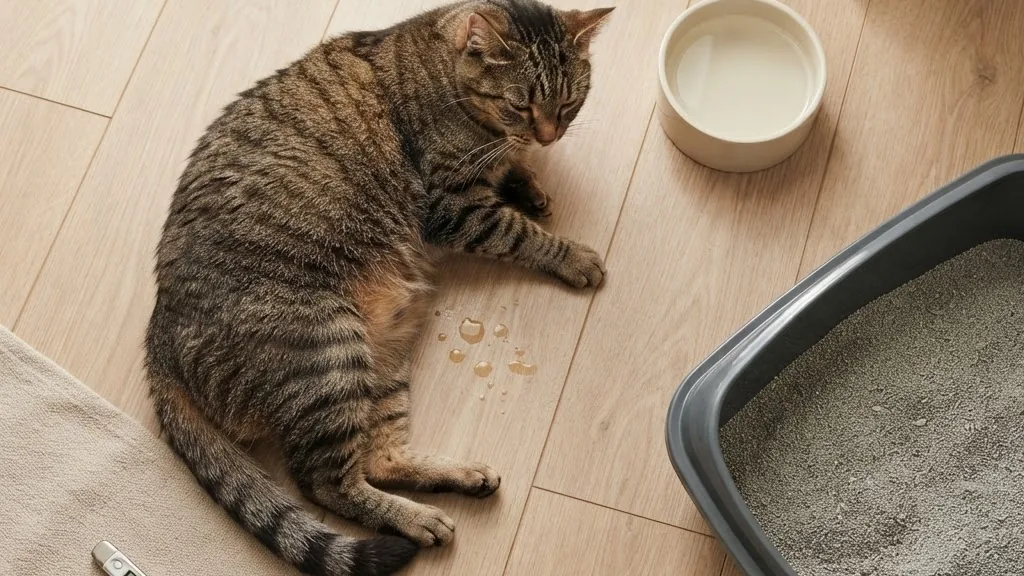
Cat urinary blockage symptoms center on one detail that separates a bad night from a dead cat: a male cat straining hard in the litter box while passing little or no urine. That single sign, straining with an empty stream, is the true emergency. A complete urethral obstruction can kill within 24 to 48 hours if left untreated. Both PetMD and the Cornell Feline Health Center confirm this dangerous timeline. If your cat is squatting, crying, and nothing comes out, stop reading and call an emergency vet immediately.
The condition sits inside a broader group of problems that veterinarians call feline lower urinary tract disease, or FLUTD. The dangerous subset is urethral obstruction, abbreviated UO, which occurs when the urethra physically plugs shut. Recognizing the difference between a cat that is merely uncomfortable and a cat that is fully blocked is the most useful skill an owner can build. This knowledge saves lives and prevents catastrophic suffering.
A blocked cat strains repeatedly to urinate but produces almost nothing. They often cry out, lick their genitals excessively, and hide in strange places. Male cats are affected almost exclusively because their urethra is incredibly long and narrow. Without a catheter placed under veterinary sedation, urine backs up rapidly. Potassium rises in the bloodstream, and the heart can fail inside that 24 to 48 hour window.
Straining with a normal urine volume is not a blockage. Straining with an empty litter box absolutely is. Treat it as a same-hour emergency and skip every single home remedy you find online. There is no natural cure for a physical urethral plug, and waiting even a few hours can move a cat from stable to critical.
The Defining Sign: Straining With Little Or No Urine
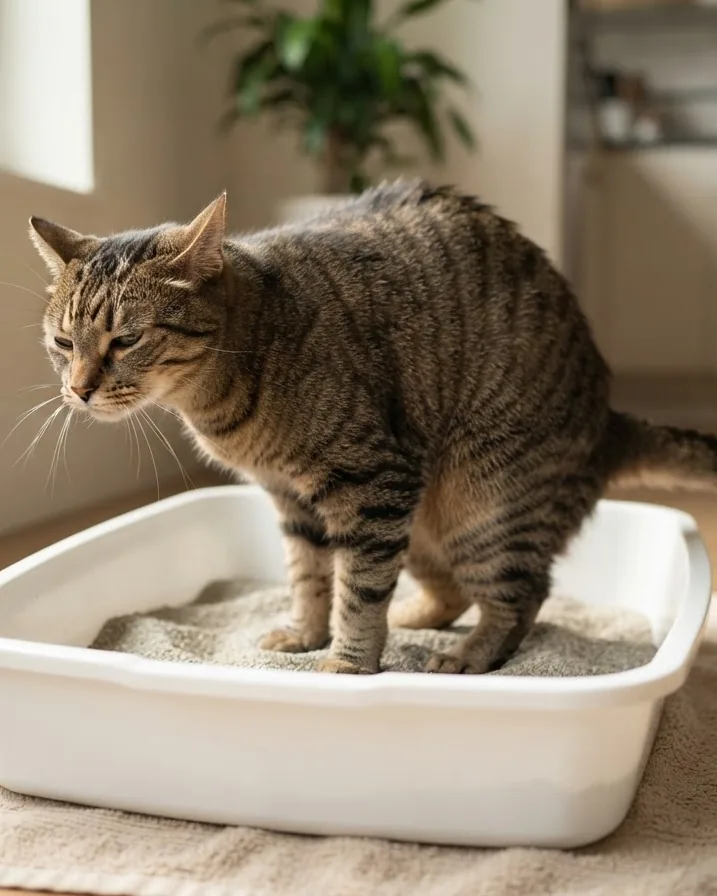
Straining with little or no urine is the anchor symptom of a urinary blockage. It is the one detail that flips an ordinary vet visit into a life-or-death emergency. A healthy cat produces a clear, substantial puddle in the litter box. A blocked cat crouches, pushes, strains, and leaves the litter entirely dry. Sometimes, you might see a few tiny drops of red or pink fluid, but nothing more.
The bladder is constantly filling with urine from the kidneys, but that fluid cannot empty out. The American Veterinary Medical Association notes that this behavior is easily mistaken for constipation. The squatting posture looks identical to an owner across the room. Yet the consequence of a urinary blockage is measured in hours, not days. You must watch what actually lands in the litter, not just how the cat sits.
Owners often describe a frantic, repetitive pattern of behavior. The cat will go in and out of the litter box every few minutes. Some cats stop using the box entirely and squat on cool tile floors, in the bathtub, or on piles of laundry. The clearer your report to the clinic, the faster the triage team will move. Observation is your best tool in these moments.
If you have watched cats for other medical reasons, such as reading about what excessive cat drooling can mean, you already know that pain and nausea change behavior visibly. A blocked cat is in agonizing pain. The pressure inside the bladder builds relentlessly, causing extreme distress that the cat simply cannot hide.
- Repeated trips to the litter box within minutes
- A dry box or only a few blood-tinged drops
- Loud vocalizing or crying during the attempt
- Squatting outside the box in unusual spots
- Constant pacing and inability to settle
Analyzing The Litter Box Clues
The litter box is the primary diagnostic tool you have at home. When you suspect a problem, you must immediately inspect the box. Clumping litter makes this process much easier. If you see normal-sized clumps of urine, the cat is currently passing fluid. If the box has no clumps, but the cat has been visiting it repeatedly, you have a crisis on your hands.
Sometimes, owners mistake small, frequent puddles for a blockage. If the cat is passing marble-sized clumps every hour, they are passing urine, albeit uncomfortably. This usually points to a urinary tract infection or non-obstructive cystitis. However, if those small clumps suddenly stop appearing and the cat continues to strain, a partial blockage has likely become a complete obstruction.
Blockage Vs Constipation Vs UTI: The Decision Aid
Telling a blockage apart from constipation or a simple infection is the highest-panic moment for most owners. The rule is short and absolute: straining with a normal volume of urine is not a blockage, while straining with little or no urine is an emergency. Constipation involves straining to pass stool, and a constipated cat is usually still urinating normally elsewhere in the box.
A urinary tract infection or non-obstructive cystitis produces frequent, painful, bloody urination, but urine still comes out of the body. Complete obstruction is the only scenario where the bladder cannot empty at all. It is the only condition in this group that turns lethal overnight. You cannot afford to guess wrong when dealing with these symptoms.
Use the quick reference table below when you are standing over the litter box at midnight. This simple breakdown can help you decide whether the situation requires an immediate car ride to the emergency clinic or if it can wait for your regular vet to open.
| Clinical Sign | Blockage (UO) | Constipation | UTI or Cystitis |
|---|---|---|---|
| Urine output | Little or absolutely none | Normal volumes | Small, frequent amounts |
| What is actually passed | Nothing, or tiny bloody drops | Hard dry stool, or none | Bloody or cloudy urine |
| Medical urgency | Hours until fatal | Days to resolve | Same or next day visit |
| Sex most affected | Overwhelmingly Male | Either sex equally | Either sex equally |
When in doubt, always treat it as the worst-case scenario. A partial obstruction can become complete without any warning. A cat that was passing small drops at eight in the evening can be fully blocked and declining rapidly by midnight. Do not wait for morning if you have any doubts about their urine output.
Recognizing A Partial Obstruction
A partial obstruction is a deceptive and dangerous middle ground. The urethra is narrowed by mucus, crystals, or severe inflammation, but a tiny trickle of urine can still squeeze past. The cat will show all the signs of distress, including frequent straining and crying, but you will still find small, wet spots in the litter box.
Owners often see these small spots and assume the cat is safe from a complete blockage. This is a fatal assumption. The debris causing a partial blockage can shift or clump together at any second, sealing the urethra completely. Furthermore, the severe inflammation caused by the partial blockage causes the urethral tissues to swell, which can close off the remaining opening entirely.
The Full Symptom Set, Early To Emergency
Symptoms of a urinary blockage arrive in distinct tiers. Knowing this ladder of symptoms tells you exactly how much time you have already lost. Early signs are behavioral, subtle, and incredibly easy to dismiss. They include frequent litter-box trips, crying while trying to urinate, over-licking the genital area, dropping blood-tinged spots, and hiding under furniture.
The Cornell Feline Health Center lists difficult urination, increased frequency, vocalizing, and genital licking among the core lower urinary tract signs. As the bladder distends further, the cat enters the middle tier of symptoms. They grow deeply lethargic, completely refuse food, and may begin to vomit due to the internal pressure and pain.
At this middle stage, the abdomen becomes very firm and highly painful to the touch. The bladder feels like a hard, swollen fruit in the lower belly. If you gently press the stomach and the cat cries out or tenses violently, the clock is running out quickly. These middle-tier signs mean the body is starting to suffer systemic effects.
The late tier is a full medical crisis. Once toxins and potassium build to critical levels in the blood, cats slide rapidly toward total collapse. They develop a dangerously slow heart rate, low body temperature, and severe shock. The American Red Cross emphasizes these late-stage cues in its owner first-aid guidance precisely because owners often miss the earlier behavioral ones.
- Early Stage: Frequent box trips, crying, genital licking, blood-tinged drops, seeking isolation.
- Middle Stage: Profound lethargy, vomiting, refusing food, firm and highly painful belly.
- Emergency Stage: Total collapse, severe weakness, slow heart rate, cold extremities, deep shock.
A cat that has reached the emergency tier needs a fully equipped veterinary hospital immediately. They cannot survive a car ride to a general practice that closes at six o’clock, as they require overnight intensive care, intravenous fluids, and constant monitoring to survive the night.
Late-Stage Emergency Symptoms: Toxins And The Heart
When a cat cannot urinate, the kidneys cannot filter waste products out of the blood. This leads to a condition called postrenal azotemia, where toxins like blood urea nitrogen and creatinine skyrocket. These toxins cause severe nausea, which explains the vomiting and total loss of appetite seen in the middle and late stages of an obstruction.
However, the most lethal consequence of an obstruction is the buildup of potassium in the bloodstream, known as hyperkalemia. Kidneys normally excrete excess potassium into the urine. When the exit is blocked, potassium levels surge. Normal serum potassium is relatively low, but in a blocked cat, it rapidly climbs to dangerous heights.
According to veterinary resources like eClinPath and specific Cornell case studies, serum potassium at or above 8.0 mEq/L is reported to cause marked weakness in cats. This high potassium disrupts the electrical signals in the heart muscle. It prevents the heart from repolarizing correctly, leading to bradycardia, which is an abnormally slow heart rate.
If the blockage is not relieved, the heart rate will continue to drop until the heart simply stops beating. This fatal hyperkalemia can develop within about 48 hours of a complete obstruction. It is the primary reason why time is the most critical factor in saving a blocked cat’s life.
Why It Is Almost Always Male Cats
Male cats account for nearly all urinary blockages, and this is a matter of plumbing, not bad luck. The male feline urethra is relatively long and tapers to a very narrow point near the tip of the penis. Because of this bottleneck, the crystals, mucus, and cellular debris that form a urethral plug lodge easily and seal the tube shut entirely.
The AVMA states that urethral obstruction is most often found in male cats between one and 10 years old. They also note that neutered or intact males both outrank females in risk for exactly this anatomical reason. The narrowness of the male urethra acts like a funnel that gets clogged by debris that a female cat would easily flush out.
The numbers firmly back up this male-dominated pattern. In a detailed study at one United States emergency service, urethral obstruction made up 4.63 percent of all feline cases. However, it made up a massive 8.11 percent of all male-cat cases. This data was reported by Hetrick and Davidow in the Journal of the American Veterinary Medical Association in 2013.
Another massive study highlights the sheer scale of the risk. A large United Kingdom primary-care study of 237,825 male cats in 2016 found a UO incidence risk of 0.54 percent, with a 95 percent confidence interval of 0.51 to 0.57 percent. This means that out of that population, over 1,200 male cats experienced a blockage. The odds per individual cat may seem low, but the result per event is catastrophic.
Feline Anatomy And The Urethral Bottleneck
To understand the danger, you must visualize the feline urinary tract. The kidneys produce urine, which travels down two tiny tubes called ureters into the bladder. The bladder acts as an expandable storage balloon. When the cat is ready to urinate, the bladder muscle contracts, forcing urine out through a single tube called the urethra.
In female cats, this urethra is short, wide, and relatively straight. It can easily pass small stones, clumps of mucus, and inflammatory debris. In male cats, the urethra travels a longer distance and narrows significantly as it passes through the penis. This specific anatomical bottleneck is where the vast majority of deadly plugs become wedged.
Permits, Inspections And Clinical Authorities
Behind every therapeutic urinary diet, prescription medication, and poison control hotline sits a complex web of oversight bodies. Knowing who governs what helps pet owners judge the quality of the guidance they receive. The FDA Center for Veterinary Medicine, part of the U.S. Food and Drug Administration, strictly regulates the therapeutic urinary diets and drugs a veterinarian may prescribe.
This strict FDA regulation is why a veterinary stone-dissolving food carries verified label claims that a cheap grocery-store bag cannot legally make. The American Veterinary Medical Association sets the high professional standards that all U.S. veterinarians practice under. Meanwhile, the American College of Veterinary Surgeons certifies the specialized surgeons who perform complex procedures like a perineal urethrostomy.
Clinical direction for veterinarians comes from globally recognized guideline authorities. The International Society of Feline Medicine, operating as iCatCare, published the 2025 consensus guidelines on the diagnosis and management of lower urinary tract diseases in cats. This gold-standard document includes a specific triage algorithm for handling urethral obstructions safely and effectively.
The Cornell Feline Health Center at Cornell University College of Veterinary Medicine leads the world in feline research and owner education. Peer-reviewed statistics and survival rates flow through highly respected publications like the Journal of the American Veterinary Medical Association, the Journal of Veterinary Emergency and Critical Care, and the Journal of Feline Medicine and Surgery.
What does this vast oversight network cost the owner in practice? It translates into prescription-only diets, strict veterinary exam requirements before dispensing medications, and licensed surgical care rather than a cheaper, unregulated fix. The regulation you are paying for is exactly what keeps a struvite-dissolving diet honest, safe, and effective.
- FDA Center for Veterinary Medicine: Approves all prescription urinary diets and medical drugs.
- American Veterinary Medical Association: Sets the operational and U.S. veterinary practice standards.
- American College of Veterinary Surgeons: Certifies top-tier surgeons and guides urinary stone management.
- iCatCare and Cornell Feline Health Center: Publish clinical algorithms and vital owner guidance.
You can read the comprehensive AVMA overview of feline lower urinary tract disease and its causes. For further depth, explore the detailed Cornell Feline Health Center guide to FLUTD. If surgery is on the table, review the ACVS reference on urinary stones and surgery for the exact source guidance behind this section.
Causes And Risk Factors Behind The Plug
Urinary blockages trace back to a handful of primary causes, with diet and environmental stress sitting at the absolute top of the list. The urethra typically plugs with a soft, toothpaste-like material made of minerals, sloughed cells, and mucus-like protein. In other cases, the urethra jams on a solid, jagged crystal or a hardened urinary stone.
The two most common stone types found in cats are struvite and calcium oxalate. Struvite stones are built from a combination of magnesium, phosphorus, and ammonia, and they can often be dissolved by feeding a highly specific acidic diet. Calcium oxalate stones, however, cannot be dissolved by any diet. They must be physically removed through surgery or flushed out.
The exact breakdown of FLUTD cases, as reported by Today’s Veterinary Practice citing the broader literature, shows a clear pattern. Feline idiopathic cystitis accounts for about 53 percent of cases. Urolithiasis, which means the presence of stones, causes about 29 percent. Urethral plugs make up about 18 percent. The risks for all these causes stack up heavily with lifestyle factors.
- Male sex and being neutered
- Indoor-only living with low physical activity
- Overweight body condition and obesity
- A dry-food-only diet combined with low water intake
- Environmental stress and multi-cat household conflict
An Israeli case-control study conducted by Segev in 2011, and published in the Journal of Feline Medicine and Surgery, found that dry-food-only diets were massively over-represented among blocked cats. This specific finding reinforces the fact that dietary water intake is a highly modifiable lever that owners can use to prevent future blockages.
Feline Idiopathic Cystitis (FIC) Explained
Feline idiopathic cystitis, or FIC, is a complex and frustrating condition that drives the majority of blockages. The AVMA notes that FIC is the most common driver of lower urinary tract signs in cats under 10 years old. The word idiopathic means that the exact cause is unknown, but extensive research links it directly to severe physiological stress.
In a cat with FIC, the protective glycosaminoglycan layer lining the inside of the bladder breaks down. This exposes the sensitive bladder wall directly to acidic urine, causing intense pain and severe inflammation. The nerves in the bladder wall begin to fire abnormally, sending pain signals directly to the brain even when the bladder is mostly empty.
This intense inflammation causes the bladder wall to shed cells, mucus, and blood into the urine. In male cats, this thick, inflammatory soup flows down into the narrow urethra, where it rapidly solidifies into a soft plug. Therefore, managing FIC is not just about treating the bladder, but about managing the cat’s entire stress environment to prevent that inflammatory response.
Urolithiasis And Urethral Plugs
While FIC creates soft plugs, urolithiasis creates hard stones. These stones form when minerals in the urine become too concentrated. If the cat’s urine pH is too high, struvite crystals form. If the urine pH is too low, calcium oxalate crystals form. These microscopic crystals can bind together into large, solid stones that rattle around inside the bladder.
Even if a large stone does not enter the urethra, the constant friction against the bladder wall causes bleeding and inflammation. The shedding of microscopic crystals acts like sandpaper. Eventually, a small stone or a dense clump of crystals washes into the urethra and becomes wedged tight, creating a total, unyielding obstruction that requires immediate emergency flushing.
Arriving At The Emergency Vet: Triage
When you rush a blocked cat to the emergency room, the triage process is incredibly fast. Tell the front desk immediately that your male cat is straining to urinate and nothing is coming out. They will bypass the waiting room and take the cat straight to the treatment area. Time is of the essence, and vets prioritize urinary blockages above almost everything except active cardiac arrest.
The veterinarian will perform a rapid physical exam, focusing on palpating the abdomen. They are feeling for the bladder. A normal bladder feels soft and pliable, like a small water balloon. An obstructed bladder feels large, rock-hard, and extremely tense, much like a baseball or a large plum. If they feel this firm mass, the diagnosis of obstruction is highly likely.
Diagnostics: Physical Exam And Bloodwork
Diagnosis begins with the hands and quickly moves to machines. Once the hard bladder is confirmed by palpation, the team begins a rapid workup. They will pull blood from a vein to run an emergency chemistry panel. This bloodwork measures kidney values like BUN and creatinine, and crucially, it measures the life-threatening electrolyte levels, especially potassium.
That electrolyte panel is absolutely not optional. As we noted, serum potassium at or above 8.0 mEq/L causes marked weakness and cardiac arrhythmias. The vet must know the potassium level immediately to determine if the cat’s heart requires emergency stabilization drugs before they can even safely administer anesthesia for the catheterization.
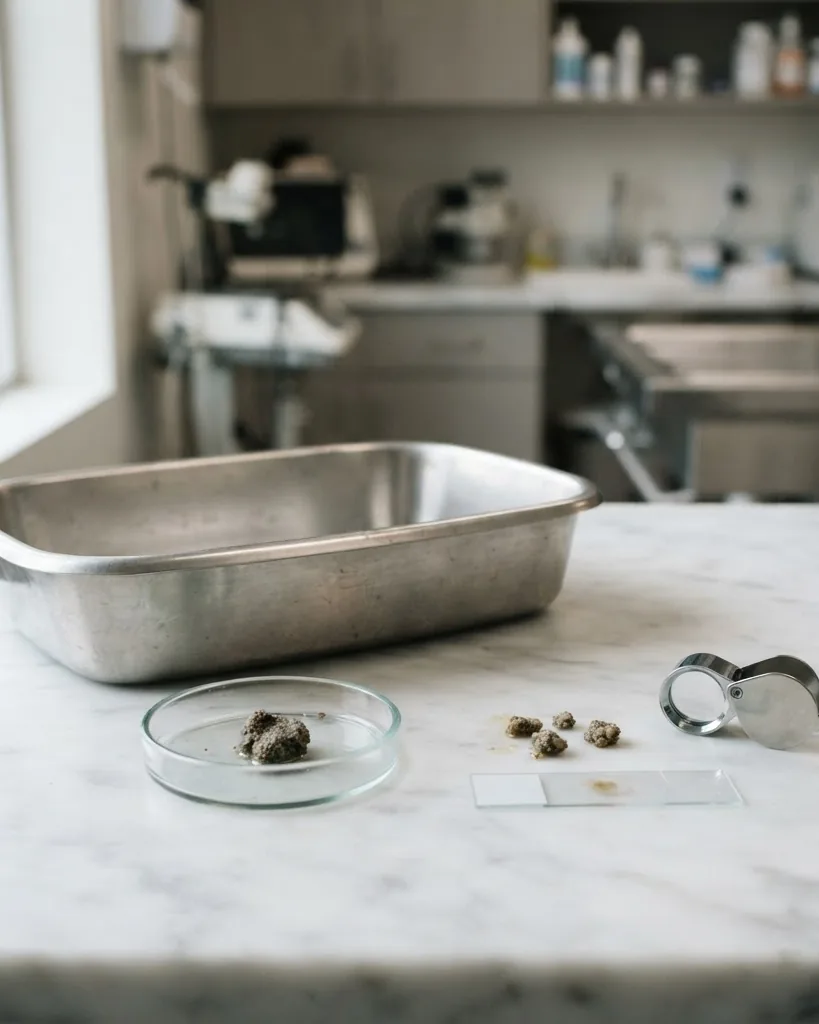
The team will also perform a urinalysis to check for the presence of microscopic crystals, red blood cells, white blood cells, and bacteria. Imaging, such as an abdominal X-ray or a quick ultrasound, is often used to visualize the bladder. This imaging helps the vet locate large stones that might require surgical removal later on.
The Catheterization And Treatment Process
Treatment for a blocked cat is urgent, highly staged, and requires deep sedation or full general anesthesia. Once the cat’s heart rhythm is deemed stable enough, the veterinary team induces sleep. A sterile field is prepped around the penis, and a specialized, lubricated urinary catheter is gently advanced into the tip of the urethra.
The veterinarian uses sterile saline to flush the urethra repeatedly. This process, known as retropulsion, uses fluid pressure to slowly break apart the plug and force the debris back up into the spacious bladder, restoring urine flow. Once the pathway is clear, a softer indwelling catheter is passed all the way into the bladder and sutured securely to the cat’s prepuce.
The bladder is then flushed multiple times with sterile saline to wash out remaining blood clots, crystals, and inflammatory debris. The indwelling catheter is attached to a closed collection bag system, allowing the veterinary staff to strictly monitor the cat’s urine output over the next few days. This step is vital to ensure the kidneys are recovering properly.
Hospitalization And IV Fluid Therapy
Unblocking the cat is only the first step. The cat must remain hospitalized with the urinary catheter securely in place. During this time, they are placed on aggressive intravenous fluid therapy. These IV fluids rehydrate the cat, flush the accumulated toxins out of the bloodstream, and force the kidneys to produce large volumes of urine.
This heavy urine production is called post-obstructive diuresis. It acts as an internal power-wash, keeping the bladder clear of new debris while the severe urethral swelling goes down. The veterinary team continuously monitors the cat’s heart rate, re-checks the bloodwork to ensure the hyperkalemia is resolving, and administers heavy pain medication to keep the cat comfortable.
The dangerous hyperkalemia typically resolves within about 24 hours once the blockage is relieved and IV fluids are flowing. After a few days, when the urine in the collection bag runs clear and the bloodwork is normal, the team removes the catheter. The cat must then prove they can urinate normally on their own before they are officially discharged to go home.
Prognosis By The Numbers: Survival And Mortality
Survival odds for a blocked cat are far better than the initial panic suggests, provided that veterinary treatment is incredibly prompt. With fast catheterization and aggressive stabilization, survival to hospital discharge runs about 90 to 95 percent. This positive range is based on Cooper’s 2015 work in the Journal of Veterinary Emergency and Critical Care, alongside data from Today’s Veterinary Practice.
Additionally, one figure widely cited through JAVMA places survival to discharge at a highly encouraging 93.6 percent. However, it is crucial to understand that these are specialist-center numbers. They represent the absolute best-case pipeline of a cat that reached well-funded, high-level veterinary care in time, and whose owners could afford the full course of treatment.
Real-world outcomes vary dramatically by setting, and clinical honesty matters deeply here. The United Kingdom primary-care study of 237,825 male cats reported death during a UO episode in a staggering 29.6 percent of cases. Crucially, 88 percent of those deaths involved humane euthanasia. This sobering contrast to the specialist survival rates is driven almost entirely by treatment cost and veterinary access.
The Segev 2011 study in Israel found an overall mortality rate of 8.5 percent in their specific clinical cohort. That study also explicitly flagged both hypocalcemia (low blood calcium) and hyperkalemia (high blood potassium) as major mortality risk factors. If a cat arrives at the clinic already suffering from these severe electrolyte imbalances, their chances of survival drop significantly.
Understanding Financial Costs And Euthanasia Stats
The total bill includes the emergency exam fee, comprehensive blood panels, deep sedation, specialized catheters, continuous IV fluids, overnight hospitalization, and intensive nursing care. While costs vary wildly by region and clinic, owners should expect a multi-day hospital stay for a blocked cat. If the cat requires emergency stabilization for a failing heart, or if they suffer complications, the cost climbs higher. This financial burden forces many loving owners to choose euthanasia when they cannot secure the funds.
Recurrence adds another layer of financial dread. Cooper’s 2015 research reported recurrence rates of 15 to 40 percent. The broader veterinary literature spans a recurrence range of 11 to 43 percent, with some specific cohorts reaching up to 47 percent. A shelter-cat review even reported FLUTD-sign recurrence reaching up to 51 percent.
Segev’s study specifically found a recurrence rate of 22 percent at the 6-month mark and 24 percent at the 2-year mark. Knowing these numbers helps owners prepare. A blockage is rarely a one-time event unless rigorous preventative changes are made at home. Budgeting for potential future care or securing pet insurance immediately after recovery is highly recommended.
Post-Hospital Care: The First 48 Hours At Home
When you bring your cat home from the hospital, the danger is not entirely passed. The urethra is still inflamed and highly irritated from the catheter. Your cat will likely strain slightly, and you may see small amounts of blood in the urine for a few days. This mild straining is normal post-catheter behavior, but it requires extreme vigilance to ensure they are still passing fluid.
You must isolate the cat in a quiet room with their own litter box, water source, and food. This isolation allows you to monitor their urine output with total accuracy, without other household pets confusing the evidence. Check the litter box every few hours. If the cat begins straining and passing absolutely nothing again, they have re-blocked and must return to the ER instantly.
Prevention: Modifying Water And Diet
Prevention of a repeat blockage rests heavily on water, weight, and calm. These are the three levers an owner actually controls. Because urethral plugs form rapidly in highly concentrated urine, driving up the cat’s water intake dilutes the chemical culprits. The easiest way to increase water is to completely eliminate dry kibble and switch to an all-wet-food diet.
Offer a flowing pet water fountain, mix extra warm water into their wet food to create a soupy texture, and place multiple water bowls in quiet, safe spots around the house. Therapeutic urinary diets prescribed by the veterinarian specifically target struvite crystal formation and optimize urine acidity. Remember, the FDA Center for Veterinary Medicine regulates the strict medical claims on these prescription foods.
Weight control is also vital. Obese, inactive indoor cats are at a vastly higher risk for urinary stagnation and blockage. Encourage daily play with wand toys or laser pointers to get the cat moving. Physical activity helps stimulate regular bladder emptying and keeps the cat’s weight in a healthier, lower-risk range.
Stress Reduction And Multi-Cat Households
Stress reduction matters immensely because feline idiopathic cystitis is heavily anxiety-linked. Cats are masters at hiding stress, and conflicts that humans barely notice can trigger severe bladder inflammation in a susceptible cat. Multi-cat households are prime environments for subtle bullying, resource guarding, and territorial disputes that lead to FIC flare-ups.
To reduce multi-cat conflict, you must multiply their resources. Ensure there are multiple feeding stations, water bowls, scratching posts, and elevated resting spots spread throughout the house. No single cat should be able to block access to essential resources. Using synthetic feline facial pheromone diffusers plugged into the walls can also help lower the baseline anxiety level in the home.
Managing Litter Box Hygiene
Litter box management is the final pillar of stress reduction. A dirty, cramped, or poorly placed litter box is a major source of anxiety for cats. If a cat avoids the box because it is foul or unsafe, they hold their urine longer, which concentrates the minerals and increases the risk of a plug forming. You must scoop every single box at least once a day.
The Cornell Feline Health Center firmly recommends having roughly one more litter box than the total number of cats in the household. If you have two cats, you need three boxes. These boxes must be large, uncovered, and placed in quiet, low-traffic areas of the home where the cat cannot be ambushed by other pets or loud appliances.
When To Consider Perineal Urethrostomy (PU)
When a cat blocks repeatedly despite rigorous medical management and strict diet changes, perineal urethrostomy enters the conversation. The ACVS describes PU as a complex surgical widening of the urethra, heavily reserved for recurrent obstructors. The surgeon amputates the narrowest part of the penis and sutures the wider, internal portion of the urethra directly to the skin.
This surgery effectively gives the male cat a wider, female-like urinary opening, allowing crystals and mucus to pass easily without jamming. However, Cornell notes that PU surgery is generally considered a last resort because it carries its own set of serious complications. These include postoperative bleeding, stricture formation at the surgical site, and a permanently higher rate of bacterial bladder infections.
The cost of a PU surgery is substantial, often running thousands of dollars on top of the emergency unblocking fees. Yet, for a cat that has blocked three or four times, it is often the only path to long-term survival. Owners who track their cat’s health changes closely, much in the same way they might research the early signs of liver disease in cats, catch recurrence faster and can make informed surgical decisions.
Frequently Asked Questions
How long can a cat survive with a complete urinary blockage?
A cat with a complete urethral obstruction can die within 24 to 48 hours if left completely untreated. This extremely tight window is confirmed by both PetMD and the Cornell Feline Health Center. Toxins rapidly build in the blood, and the heart’s rhythm can fail due to hyperkalemia. This is a same-hour emergency, so any suspected blockage warrants an immediate trip to a veterinary hospital rather than waiting overnight.
Can female cats get urinary blockages too?
Yes, but it is exceptionally rare. The AVMA notes that male cats face far higher risk because their urethra is much longer and narrower, easily trapping soft plugs and hard stones. Females have a shorter, wider urethra that passes debris much more easily, so a physical blockage is uncommon in them. However, female cats still frequently develop lower urinary tract signs from infection or cystitis, and any straining deserves veterinary attention.
What is the exact difference between a blockage and simple constipation?
The deciding evidence is what actually lands in the litter. A blocked cat strains forcefully but passes little or no urine. A constipated cat strains to pass stool but will usually still urinate normally in the box. The AVMA warns that the physical squatting posture looks identical, so owners often confuse them. If the box stays entirely dry after repeated attempts, treat it as a urinary emergency immediately.
How often do male cats re-block after their initial treatment?
Recurrence is highly common and a major concern. Cooper’s 2015 research reports a recurrence rate of 15 to 40 percent. The broader veterinary literature spans 11 to 43 percent, and some specific cohorts reach up to 47 percent. Segev’s 2011 study found 22 percent recurrence at 6 months and 24 percent at 2 years. Strict prevention through water intake, therapeutic diet, and stress reduction lowers the odds significantly.
What survival rate should I expect with fast emergency treatment?
With prompt veterinary catheterization and stabilization, survival to hospital discharge runs about 90 to 95 percent, according to Cooper 2015 in the Journal of Veterinary Emergency and Critical Care. However, real-world numbers are much harsher. A massive United Kingdom primary-care study found death in 29.6 percent of UO episodes, with 88 percent of those being humane euthanasia, largely reflecting high costs rather than medical inevitability.