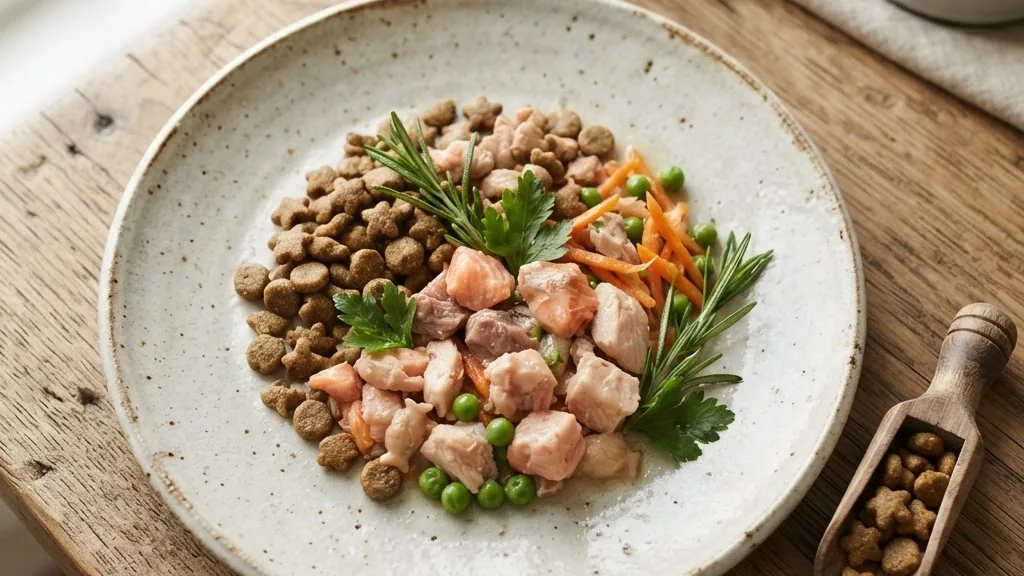
Grain free cat food is everywhere, and the marketing is louder than the science. Walk down any pet-food aisle and “grain-free” is stamped across bag after bag, usually next to a picture of a wild cat and a promise of something more natural. It is one of the most successful marketing phrases in the industry. It is also one of the most misunderstood. Grain-free does not automatically mean healthier, lower in carbohydrate, or better for your cat, and in some cases it can distract from the things that genuinely matter.
In this guide the Meowlore team walks through what grain-free really means, whether grains are actually bad for cats, why true grain allergies are rare, the carbohydrate details most labels gloss over, and the ongoing FDA investigation into diet-associated heart disease. We also show you how to read a label, when grain-free might make sense, and how to talk it through with your veterinarian. This article is educational and is not a substitute for advice from your own veterinarian, who knows your individual cat.
The quick answer, honestly
For the large majority of healthy cats, there is no proven health benefit to choosing a grain-free diet over a well-formulated grain-inclusive one. Grains are not toxic to cats, true grain allergies are uncommon, and the label “grain-free” tells you almost nothing about the nutritional quality of what is inside the bag or can.
That does not make grain-free foods bad, either. Many grain-free diets are complete, balanced, and perfectly appropriate. The point is that grain-free is a formulation choice, not a quality guarantee. What actually determines whether a food is good for your cat is the balance of animal protein, fat, and carbohydrate, the moisture level, the manufacturer’s quality control, and whether the food meets recognized nutritional standards for your cat’s life stage. We spend the rest of this guide showing you how to judge those things instead of a marketing badge.
What “grain-free” actually means
Grain-free simply means the recipe leaves out cereal grains: corn, wheat, rice, barley, oats, and sorghum. That is the entire definition. It is a description of what is absent, not a promise of what is present.
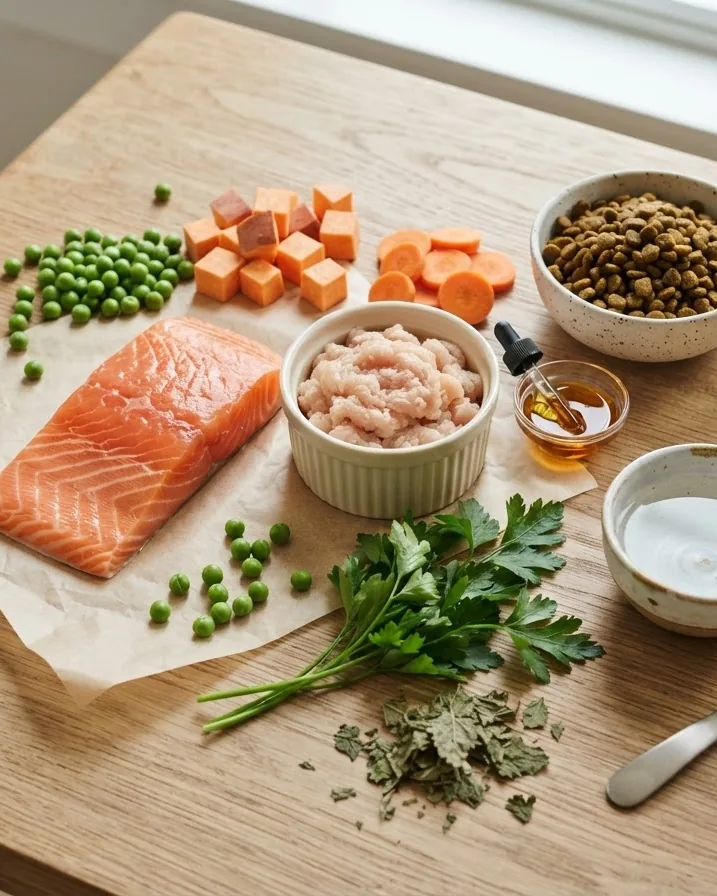
Here is the part that surprises many cat owners. Cats still need some carbohydrate and fiber in a shelf-stable food, and dry kibble in particular needs starch to hold its shape. So when the grains come out, something has to go back in. In grain-free foods, that something is usually peas, lentils, chickpeas and other legumes (collectively called pulses), white potato, sweet potato, or tapioca. These ingredients carry their own starch. Removing rice and adding potato does not remove the carbohydrate; it just changes the source.
It is also worth knowing that “grain-free” is a marketing term, not a regulated health claim. The Association of American Feed Control Officials, known as AAFCO, which sets the model nutrient standards most US pet foods follow, does not define grain-free and does not treat it as a measure of nutritional adequacy. So two bags that both say grain-free can be nutritionally worlds apart.
Cats are obligate carnivores: what that requires
Cats are obligate carnivores, and this is the biological fact the grain-free marketing leans on. Unlike dogs or people, cats have evolved to get their nutrition from animal tissue. They require several nutrients that are found in meat and are difficult or impossible for them to make in sufficient quantity from plants. These include taurine, an essential amino acid that cats cannot synthesize adequately and that is vital for heart and eye health, along with arginine, arachidonic acid, and preformed vitamin A. In the wild, a cat’s diet of small prey such as rodents and birds is high in protein, moderate in fat, and very low in carbohydrate.
The Cornell Feline Health Center and other veterinary authorities emphasize that cats draw their energy best from protein and fat rather than carbohydrate. That is a real and important point. But notice what it does and does not say. It says cats need animal protein and specific nutrients. It does not say grains are poison. A cat being an obligate carnivore is an argument for a protein-rich, animal-based, nutritionally complete diet. It is not, by itself, an argument for grain-free, because grain-free foods can still be high in plant carbohydrate from legumes and potatoes. The carnivore biology is real; the leap from “carnivore” to “must be grain-free” is where the marketing overreaches.
Are grains bad for cats? Myth versus fact
The most common belief behind grain-free buying is that grains are unhealthy for cats, or that cats cannot digest them, or that grains are a leading cause of allergies. The evidence does not support any of these claims for healthy cats.
First, digestion. Cooked, processed grains such as those in commercial cat food are digestible for cats. Whole raw grains would be a different matter, but that is not what goes into a properly manufactured diet. There is no good evidence that moderate amounts of well-cooked grains harm a healthy cat.
Second, allergies. This is the big myth. True food allergy exists in cats, but a grain-specific allergy is exceptionally rare. When cats do react to their food, the culprit is far more often an animal protein. The proteins most commonly linked to feline food allergy are beef, fish, chicken, and dairy, not corn or wheat. So a cat with itchy skin or chronic tummy trouble is statistically much more likely to be reacting to the chicken in a grain-free chicken recipe than to any grain. Swapping to grain-free while keeping the same protein source often changes nothing.
Third, diagnosis. A genuine food allergy is not diagnosed by removing grains and watching. It is diagnosed with a strict elimination diet trial, typically run for 8 to 12 weeks under veterinary supervision using a novel or hydrolyzed protein, followed by a challenge to confirm the trigger. If you suspect your cat reacts to food, that structured process is the right path. We cover the signs and the workup in more detail in our guide to cat food allergies. The short version is that grain-free is not a reliable allergy fix, and treating it as one can delay a real diagnosis.
The carbohydrate nuance grain-free hides
Because cats do best on relatively low carbohydrate, many shoppers assume grain-free equals low-carb. It does not, and this is one of the most important things to understand.
Pet food labels do not even list carbohydrate in the guaranteed analysis, so it is easy to overlook. When researchers have measured it, the picture is nuanced. One analysis of dry cat diets found grain-free foods averaged around 22.4 percent of metabolizable energy from carbohydrate, compared with about 30.1 percent for grain-containing dry foods. So on average grain-free dry food was somewhat lower in carbohydrate, but the difference is modest, the ranges overlap heavily, and plenty of grain-free dry foods land as high in carbohydrate as grain-inclusive ones. Grain-free is a weak predictor of carb content, not a reliable one.
The reason is simple. Dry kibble needs starch to form and hold together, whether that starch comes from rice or from peas and potatoes. Owners who genuinely want a lower-carbohydrate diet, often cited as under about 15 percent of dry matter, usually get there faster by choosing wet food or by actually calculating the carbohydrate content, rather than by trusting a grain-free label. If low carbohydrate is your goal, chase the number, not the badge.
The FDA DCM concern, explained fairly
No honest discussion of grain-free is complete without the dilated cardiomyopathy, or DCM, question. This is the single most cited safety concern, and it deserves a careful, balanced summary rather than a headline.
DCM is a serious heart disease in which the heart muscle weakens and enlarges. In cats it has historically been linked to taurine deficiency, which is why cat foods have been supplemented with taurine for decades. In July 2018, the FDA Center for Veterinary Medicine announced it was investigating a possible link between certain diets and DCM, chiefly in dogs. Many of the implicated diets were labeled grain-free and were high in peas, lentils, other legume seeds (pulses), and potatoes.
The numbers give useful perspective. In a June 2019 update, the FDA reported that between January 1, 2014 and April 30, 2019 it had received 524 DCM case reports. Those reports involved 560 dogs, of which 119 died, and just 14 cats, of which 5 died. The overwhelming majority of cases were in dogs. Cat reports were very few, which is one reason the concern for cats specifically remains limited and unproven.
Two points matter most here. One, a causal link has not been established. The FDA suspected taurine and other mechanisms, but the science has not confirmed that grain-free or legume-rich diets cause DCM, and no broad recall resulted. Two, this is an open question, not a closed one, and the caution applies far more to dogs than to cats on current evidence. You can read the FDA’s own investigation page for the primary source: the FDA DCM investigation. For cats, the practical takeaway is neither panic nor dismissal. It is a reason to favor foods from established manufacturers with strong quality control and veterinary nutrition expertise, and to raise the topic with your vet if your cat eats a legume-heavy grain-free diet.
How to read a cat food label
If you take one skill from this guide, make it this one. The most useful thing on a bag or can is not the grain-free flag on the front; it is the AAFCO nutritional adequacy statement, usually printed in small type near the guaranteed analysis.
That statement tells you whether the food is “complete and balanced” and for which life stage: growth (kittens), adult maintenance, or all life stages. A food that is complete and balanced for your cat’s life stage supplies every required nutrient, including taurine, in adequate amounts. A food without that statement, or one labeled for intermittent or supplemental feeding only, should not be the sole diet. It is even better if the food achieved adequacy through AAFCO feeding trials rather than only by formulation, because a trial tests the food in real animals.
Protein is the next thing to check. AAFCO’s model profiles set a minimum crude protein of 26 percent on a dry-matter basis for adult maintenance and 30 percent for growth and reproduction. These are floors, not targets, and many good cat foods run in the mid-30s percent protein on a dry-matter basis or higher. Because moisture varies, comparing foods fairly means converting to a dry-matter basis rather than reading the as-fed percentages on the package.
The ingredient list is worth a glance, but do not over-read it. A named animal protein such as chicken or salmon near the top is a good sign, yet ingredient order is by weight before cooking and can be gamed. The adequacy statement, the guaranteed analysis, and the manufacturer’s reputation tell you more than whether peas appear before or after the meat.
Grain-free versus grain-inclusive at a glance
The table below compares the two approaches on the factors cat owners actually care about. Neither column is a winner in every row, which is exactly the point.
| Factor | Grain-free | Grain-inclusive |
|---|---|---|
| Carbohydrate source | Peas, lentils, potato, tapioca | Corn, rice, wheat, barley, oats |
| Typical carb level (dry) | Around 22.4% ME on average, wide range | Around 30.1% ME on average, wide range |
| Digestibility for healthy cats | Good | Good (cooked grains are digestible) |
| Common allergy trigger | Usually the protein, not the carb | Grain allergy is rare; protein is the usual trigger |
| Meets nutritional needs | Yes, if AAFCO complete and balanced | Yes, if AAFCO complete and balanced |
| Cost | Often higher | Often lower |
| DCM investigation link | Legume-heavy versions were studied (mainly dogs) | Not a focus of the investigation |
| Best judged by | Adequacy, protein, moisture, maker | Adequacy, protein, moisture, maker |
Who might actually benefit from grain-free
There is a legitimate, if narrow, case for grain-free. The clearest one is a cat with a diagnosed sensitivity to a specific grain, confirmed through a proper elimination trial rather than assumed. That is genuinely uncommon, but it happens, and for that cat avoiding the offending grain is appropriate.
Beyond that, some owners choose grain-free as part of a deliberate effort to feed a higher-protein, lower-carbohydrate diet, and a few well-formulated grain-free foods fit that goal. That is a reasonable preference, provided the food is complete and balanced and you have actually checked the numbers rather than assuming the label delivers them. What does not hold up is the belief that grain-free is universally healthier, or that switching to it will resolve most itching, vomiting, or weight problems. For the typical cat with no diagnosed grain issue, a quality grain-inclusive diet is an equally valid choice.
Wet versus dry
The grain question often gets tangled up with the wet-versus-dry question, but they are separate decisions, and wet versus dry usually matters more for a cat’s health.
Canned or wet food is roughly 75 to 78 percent moisture. That high water content helps with hydration, which supports urinary tract and kidney health, and it tends to make wet foods higher in protein and lower in carbohydrate than kibble. Many cats do not drink enough water on their own, so getting moisture through food is a real advantage. Wet food also tends to be more satiating for its calories, which can help with weight control.
Dry food is about 8 to 10 percent moisture. It is convenient, less expensive, easy to leave out, and useful for puzzle feeders and dental-focused kibbles. Its trade-off is that it is generally higher in carbohydrate, because starch is needed to form the kibble, and it delivers far less water. Dental health is another reason cats are worth thinking about here; if you are curious how their mouths are built for a meat-based diet, see our explainer on how many teeth cats have. Whether you feed wet, dry, or a mix, the grain-free status is a minor detail next to moisture, calories, and overall balance.
How to choose a food
Pulling it together, here is a practical checklist the Meowlore team uses when evaluating a cat food, grain-free or not.
- Confirm the AAFCO complete-and-balanced statement matches your cat’s life stage. This is non-negotiable.
- Favor brands that employ a qualified nutritionist, run feeding trials, and do their own quality control and testing.
- Check protein on a dry-matter basis and look for a food comfortably above the AAFCO minimums of 26 percent for adults and 30 percent for growth.
- Consider moisture. Adding wet food is one of the simplest upgrades for many cats.
- If you want lower carbohydrate, verify the actual carb percentage rather than trusting a grain-free label.
- Match the food to your individual cat’s needs, such as age, weight, kidney or urinary history, and any diagnosed condition.
- Transition gradually over 7 to 10 days to avoid stomach upset, mixing increasing amounts of the new food with the old.
- Treat “grain-free,” “natural,” and “premium” as marketing words, not evidence. Let the adequacy statement and the numbers decide.
Notice that grain-free never appears as a requirement on this list. A food can be excellent with grains or without them. The label is simply not where quality lives.
Talking to your vet and when to see one
Your veterinarian is the right partner for diet decisions because they can weigh your specific cat’s age, body condition, and medical history in a way no article can. The American Veterinary Medical Association, known as the AVMA, and veterinary nutrition resources such as the Merck Veterinary Manual both stress individualized diet choices over one-size-fits-all trends. Bring the actual bag or a photo of the label to your appointment so your vet can read the adequacy statement and guaranteed analysis with you, and ask specifically whether a legume-heavy grain-free diet is appropriate given the ongoing DCM discussion.
Some situations call for a vet visit rather than a self-directed food swap. If you suspect a food allergy, the signs are usually chronic and include persistent itching, over-grooming or hair loss, recurrent ear or skin infections, and gastrointestinal upset such as vomiting or diarrhea. These warrant a proper elimination diet trial, not guesswork with grain-free bags.
Heart-related signs are more urgent. Because DCM affects the heart, watch for lethargy, weakness, sudden collapse or fainting, fast or labored breathing, and loss of appetite. Any of these deserves prompt veterinary attention. DCM caught early, especially when a nutritional factor such as taurine is involved, can sometimes be improved, which is one more reason not to wait. When in doubt, call your vet. A food change is rarely an emergency, but a struggling heart can be.
Frequently asked questions
Is grain-free cat food healthier than regular cat food?
Not inherently. For most healthy cats there is no proven health advantage to grain-free over a well-formulated grain-inclusive diet. Quality is determined by nutritional adequacy, protein and carbohydrate balance, moisture, and the manufacturer, not by whether grains are present.
Are grains bad for cats?
No, not for healthy cats. Cooked grains in commercial food are digestible, and there is no good evidence they harm cats in the amounts used. True grain allergy is rare. Because cats are obligate carnivores, they need plenty of animal protein, but that is an argument for protein quality, not against grains.
Can grains cause food allergies in cats?
Rarely. When cats have a food allergy, the trigger is much more often an animal protein such as beef, fish, chicken, or dairy than a grain. A grain-specific allergy is uncommon, and it can only be confirmed with a vet-supervised elimination diet trial of about 8 to 12 weeks.
Is grain-free cat food low in carbohydrate?
Not necessarily. Grain-free foods replace grains with peas, lentils, potato, or tapioca, which also contain starch. One study found grain-free dry foods averaged about 22.4 percent of energy from carbohydrate versus about 30.1 percent for grain-containing dry foods, but the ranges overlap and many grain-free foods are still fairly high in carbohydrate. Check the actual numbers if low carb is your goal.
Does grain-free cat food cause DCM heart disease?
A causal link has not been proven. Beginning in 2018, the FDA Center for Veterinary Medicine investigated a possible connection between certain legume-heavy grain-free diets and dilated cardiomyopathy, but a 2019 update showed the cases were overwhelmingly in dogs, with only 14 cats among 524 reports. The concern is unresolved and applies mainly to dogs, so it is a reason for caution and vet consultation rather than alarm.
What should I actually look for in a cat food?
Start with the AAFCO complete-and-balanced statement for your cat’s life stage, ideally backed by feeding trials. Then look for solid animal protein (above the AAFCO minimums of 26 percent for adults and 30 percent for growth on a dry-matter basis), appropriate moisture, and a reputable manufacturer with a nutritionist on staff. Grain-free or not is a minor consideration next to these.
Should I switch my cat to grain-free?
Only for a specific reason, such as a diagnosed grain sensitivity or a deliberate, verified low-carbohydrate plan, and ideally after talking with your veterinarian. For a typical cat with no diagnosed grain issue, there is no need to switch, and a quality grain-inclusive diet is an equally good choice.
How do I transition my cat to a new food safely?
Go slowly. Over 7 to 10 days, gradually mix increasing amounts of the new food with decreasing amounts of the old to avoid stomach upset. If your cat refuses the new food or develops ongoing vomiting or diarrhea, pause and consult your veterinarian.