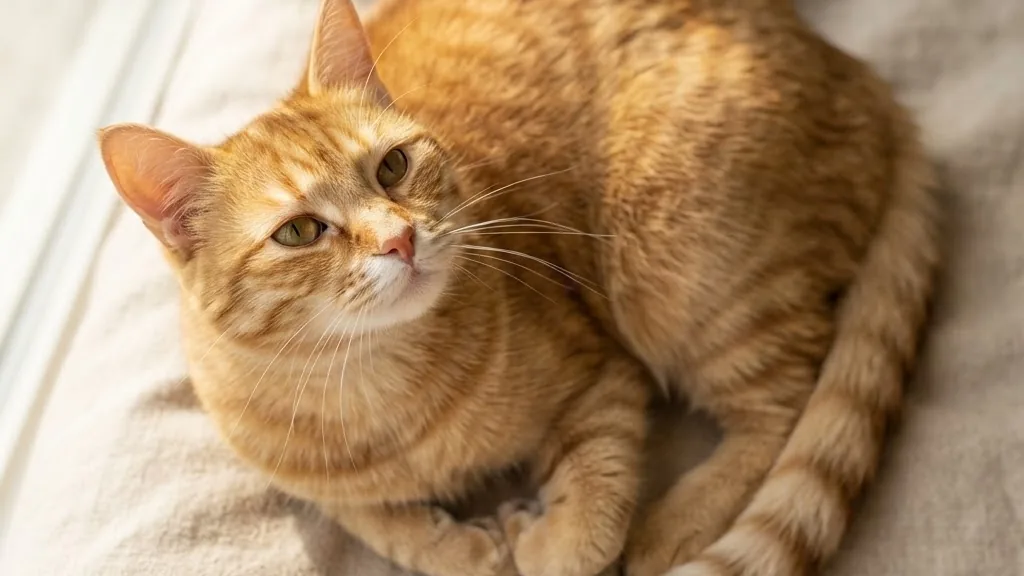
A ginger cat turns heads, and it also raises a surprising number of questions. Why are roughly 80 percent of them male? Can a female be ginger? Is the famous goofy orange-cat personality real, or is that just the internet talking? For decades the genetics were only half understood, but a 2025 discovery finally pinned down the exact mutation that makes these cats orange, and it turns out they are genetically unlike any other mammal.
This guide explains what a ginger cat really is, the X-linked genetics behind the color and the male-heavy ratio, the new science of why the coat turns orange, the truth about female ginger cats, and what the evidence actually says about that legendary personality. It is written for curious cat owners, with the genetics kept plain.
Ginger is a color, not a breed
The first thing to clear up is that “ginger cat” describes a coat color, not a breed. Ginger, orange, red, and marmalade all name the same warm coloring, and it shows up across many breeds and in ordinary domestic cats.
There is also a quirk worth knowing: ginger cats are always tabby-patterned. The orange coloring does not produce a solid, uniform coat the way black can, so every ginger cat carries a tabby pattern, whether it is the striped mackerel type, the swirled classic type, spots, or a faint ticked pattern. If you look closely at even the most uniform-looking orange cat, you will find stripes or rings, especially on the legs, tail, and face. That is not a coincidence; it is built into how the orange gene works.
The X-linked genetics
The reason ginger cats are mostly male comes down to where the orange gene sits: on the X chromosome. This is the heart of the whole story, so it is worth walking through slowly.
Cats, like people, carry sex chromosomes. Females have two X chromosomes, written XX. Males have one X and one Y, written XY. The gene that produces orange coloring rides on the X chromosome. Because a male has only one X, he needs just a single copy of the orange version of that gene, inherited from his mother, to be a ginger cat. A female, with two X chromosomes, needs the orange version on both of them to be fully ginger, which means inheriting it from both parents.
That asymmetry, one copy needed for males versus two for females, is the entire reason the color skews so heavily male. It is the same kind of X-linked inheritance that explains several other traits that differ between the sexes.
It helps to think of it like a simple lottery with two tickets versus one. A male buys a single ticket, his one X chromosome, so if that ticket is orange, he is orange. A female buys two tickets, and both have to come up orange for her to be fully orange; if only one does, she gets the mixed tortoiseshell or calico result instead. Because needing one win is far easier than needing two, males dominate the orange category. This is also why a male kitten’s color is decided entirely by the X he inherits from his mother, while a female’s depends on what she gets from both parents.
Why about 80 percent are male
Put the numbers together and the ratio falls out naturally. Around 80 percent of ginger cats are male, because the genetic bar for a male is simply lower: one orange X is enough. A female has to clear a higher bar, two orange X chromosomes, which is less likely in any given litter.
This also predicts something you can observe: ginger males are common and often come from a ginger mother, while ginger females are rarer and usually require a ginger or part-ginger father plus the right gene from the mother. The 80 percent figure is not a hard law, but it holds up well across cat populations and is one of the most reliable color-to-sex links in cats.
The 2025 discovery of the orange gene
For a long time scientists knew the orange gene was on the X chromosome but did not know exactly which gene it was. That changed in 2025. Independent research teams, including one at Stanford Medicine, identified a small deletion of DNA on the X chromosome that switches on a gene called Arhgap36 in the cat’s pigment cells.
Here is what that does, in plain terms. Pigment cells can make two kinds of pigment: eumelanin, which is dark, and pheomelanin, which is reddish-orange. The mutation linked to Arhgap36 blocks the dark eumelanin and pushes the cells toward the orange pheomelanin, flipping the coat from dark to bright orange. As reporting on the discovery noted, this mechanism appears to be unique among mammals; no other animal is known to turn orange in quite this way. After more than a century of breeding observations, the molecular answer finally arrived.
Why did it take so long to find? Coat-color genetics in cats is a puzzle of many interacting genes, and the orange gene sat in a stretch of the X chromosome that did not point to an obvious pigment gene. Arhgap36 was not previously known as a coat-color gene at all, which is part of why the finding surprised researchers. The discovery is more than trivia: understanding how a single regulatory change reroutes pigment production helps scientists study how genes are switched on and off, a question that reaches well beyond the color of a cat. It is a neat reminder that a familiar housecat can still teach the lab something new.
Female ginger cats and the calico link
Female ginger cats absolutely exist; they are just less common. A female is fully ginger only when both of her X chromosomes carry the orange gene. When she inherits orange on one X and a non-orange version on the other, something visually striking happens instead: she becomes a tortoiseshell or calico.
That patchwork of orange and black is the result of a process called X-inactivation, where each cell randomly switches off one of its two X chromosomes early in development. Some patches end up expressing the orange X and others the non-orange X, producing the mottled coat. This is also why nearly all tortoiseshell and calico cats are female: it takes two different X chromosomes to make the pattern. The same chromosome math that makes most ginger cats male makes most calicoes female, two sides of one genetic coin.
There is a famous exception that proves the rule. Very rarely, a male cat is born with an extra X chromosome, an XXY arrangement, and such a cat can be a male calico or tortoiseshell. These cats are genuinely uncommon, on the order of 1 in 3,000 calicoes, and they are usually sterile. They are the flip side of the female ginger cat: just as a female needs two orange X’s to be fully ginger, a male needs that unusual second X to show a calico pattern at all. Both cases come straight from the chromosome arithmetic, which is what makes feline coat color such a tidy, visible lesson in genetics.
Breeds that come in ginger
Because ginger is a color, it appears across a wide range of cats. You will find orange coats in everyday domestic shorthairs and longhairs, and in recognized breeds including the Maine Coon, Persian, British Shorthair, Abyssinian, and Scottish Fold, among others.
This matters for adopters who fall for the color and then wonder which “ginger breed” to look for. There is no single ginger breed to seek out. If you love the look, you can find it in a shelter domestic cat or in many pedigreed breeds, and the color itself tells you nothing about size, coat length, or temperament. Choose a cat based on the breed or individual personality and care needs you want, and treat the ginger coat as a bonus rather than a category.
Lifespan and life stages of a ginger cat
The orange coat has no effect on how long a cat lives, so a ginger cat’s lifespan matches cats in general. A well-cared-for indoor cat typically lives about 12 to 16 years, and many reach 18 or beyond with good veterinary care, a complete diet, and a safe indoor life.
Knowing the life stages helps you care for a ginger cat at each age:
- Kitten, up to about 6 months. Rapid growth, vaccinations, and the loss of baby teeth. This is also when an orange kitten’s tabby markings become clear.
- Young adult, 1 to 6 years. Peak health; the time to lock in good dental care and a healthy weight, usually somewhere around 8 to 12 pounds for an average cat.
- Mature, 7 to 10 years. Watch weight and start closer monitoring at annual exams.
- Senior, over 10 years. Twice-yearly checkups help catch kidney, thyroid, and dental issues early.
Routine wellness visits, at least every 12 months and more often for seniors, are the single biggest lever on a long life, far more than anything related to coat color. Understanding basic feline anatomy, like how many teeth a cat has, makes it easier to spot problems early.
A note on coat color and genetics
The orange gene is one of several coat-related genes that interact with a cat’s biology in interesting ways. Coat color in cats is controlled by a handful of genes that determine pigment type, pattern, and white spotting, layered on top of the orange gene we have discussed.
In some coat-color combinations, genetics links color to other traits. The clearest example is in white cats, where the genes for a white coat and blue eyes are associated with a higher chance of deafness. The orange gene is not tied to any such condition; it affects pigment alone, which is why ginger cats have no color-specific health risks. It is a useful contrast: coat color can occasionally flag a health link, but in the ginger cat’s case it simply makes a striking, healthy coat.
The personality myth, examined
Ginger cats have a reputation as goofy, friendly, chaotic attention-seekers, the so-called orange-cat energy that fills social media. It is a charming idea. It is also not well supported by science.
Coat-color genes mainly affect pigment, not brain development, hormones, or temperament, and there is no strong evidence that being orange makes a cat behave a particular way. As National Geographic’s reporting on the question explains, much of the research in this area measures human perception rather than actual cat behavior. In other words, people expect orange cats to be friendly and then notice friendliness, a bias that can shape studies as well as anecdotes.
There are a couple of honest caveats. Because most ginger cats are male, any general tendencies that track with sex could color the stereotype. And a cat’s real personality is shaped by genetics broadly, early socialization, and environment, none of which is the orange gene specifically. The fair conclusion is that your ginger cat may well be a goofball, but if so, it is because of who that cat is, not because of the color of its fur.
Why we are so drawn to orange cats
Part of the fascination is cultural. Orange cats occupy an outsized place in stories and pop culture, from Garfield and Puss in Boots to the lasagna-loving, mischief-prone characters that shaped how many of us picture the type. That steady stream of fictional orange troublemakers feeds the modern stereotype as much as any real behavior does.
There is a feedback loop at work. People who expect an orange cat to be a bold, affectionate clown tend to interpret ordinary cat behavior through that lens, remember the moments that fit the story, and share them online, which reinforces the expectation for the next person. Social media has supercharged this, turning a vague folk belief into a full-blown internet personality archetype. None of that makes the individual cats less charming; it just means the legend is built largely in our heads.
It also helps explain why the myth is so sticky despite thin evidence. A belief that is fun, widely shared, and constantly confirmed by selective attention is hard to dislodge with a genetics lecture. Knowing the science does not have to spoil the affection, though. You can enjoy your cat’s antics fully while understanding that they come from that particular animal, not from a pigment gene.
Health and care notes
Ginger cats need the same care as any cat, and the color brings no special health problems. A few small, color-related notes are worth knowing.
- Lentigo. Many orange cats develop small, flat, dark freckle-like spots on the lips, nose, gums, and eyelids as they age. This condition, called lentigo, is harmless and is simply extra pigment, not a disease. Any raised or changing spot, though, is worth a vet check to be safe.
- Sun exposure. Cats with pale or thin fur on the ears and nose can be prone to sunburn, so limit a light-coated cat’s time in strong direct sun.
- Routine care is identical. Vaccinations, dental care, parasite prevention, a complete and balanced diet, and yearly checkups apply to ginger cats exactly as they do to any other.
Treat the orange coat as a cosmetic detail. Everything that keeps any cat healthy keeps a ginger cat healthy.
One more practical point for owners: because orange cats are so often male, and unneutered males are prone to roaming, spraying, and fighting, neutering is especially worth prioritizing for a male ginger cat. That has nothing to do with the color and everything to do with the sex skew, but it is a useful real-world consequence of the genetics. A neutered indoor male orange cat, fed well and seen by a vet each year, has every chance of a long, healthy, and yes, possibly very goofy life.
Frequently asked questions
Are all ginger cats male?
No, but most are. About 80 percent of ginger cats are male because the orange gene is on the X chromosome and a male needs only one copy, while a female needs two. Female ginger cats exist; they are just less common.
Can a ginger cat be female?
Yes. A female is ginger when both of her X chromosomes carry the orange gene. If she has orange on only one X, she becomes a tortoiseshell or calico instead, which is why those patterns are almost always female.
Is ginger a cat breed?
No. Ginger is a coat color, not a breed, and it appears in domestic cats and in many breeds such as the Maine Coon, Persian, and Abyssinian. Ginger cats are also always tabby-patterned.
Do ginger cats really have a distinct personality?
There is no strong scientific evidence that coat color drives personality. Studies in this area mostly measure human perception. A ginger cat’s temperament comes from its individual genetics, socialization, and environment, not from being orange.
Why are ginger cats always striped?
The orange coloring cannot produce a solid coat, so every ginger cat shows a tabby pattern, whether stripes, swirls, spots, or faint ticking. Look at the legs, face, and tail and you will see it even on a seemingly uniform orange cat.
How long do ginger cats live?
The orange coat has no effect on lifespan. A well-cared-for indoor cat typically lives about 12 to 16 years, and many reach 18 or older with good veterinary care, a complete diet, and a safe environment. Yearly checkups, or twice-yearly for seniors over 10 years, make the biggest difference.
What is the dark spotting on my orange cat’s lips?
It is most likely lentigo, a harmless buildup of pigment that creates small dark freckles on the lips, nose, and gums of many orange cats as they age. It is not dangerous, but have a vet check any spot that becomes raised or changes.