Quick Answer: What is Cat Mastitis?
In brief: Cat mastitis is an inflammation, usually due to bacterial infection, affecting one or more of a female cat’s mammary glands. Signs include swollen, painful glands, discolored or bloody milk, and systemic illness like fever or lethargy. It most commonly affects nursing mothers but can occur in other situations. Prompt veterinary diagnosis and treatment with antibiotics are essential, as untreated mastitis can lead to severe complications or even be fatal. Early detection and owner vigilance are key to a positive outcome for your cat (liver disease in cats).
Cat mastitis is a painful inflammation of the mammary glands, often caused by bacterial infection, and requires prompt owner attention. Understanding the signs and knowing when to seek veterinary care is crucial for your cat’s well-being, especially if she is nursing.
This guide, written from the perspective of an owner who has navigated feline health issues, draws on information from leading veterinary institutions to help you recognize and respond to potential mastitis in your cat. We aim to provide clear, actionable advice, distinguishing between signs that warrant close observation and those that demand immediate veterinary intervention.
While this article offers complete insights into cat mastitis, it is not a substitute for professional veterinary diagnosis or treatment. Always consult your veterinarian for any health concerns regarding your cat.
Why Understanding Cat Mastitis Matters for Owners
As a cat owner, especially one with a female cat who has recently given birth or is currently nursing, recognizing the signs of cat mastitis is vital. This condition, while not extremely common, can cause significant pain and distress to your feline companion. The mammary glands, responsible for producing milk to nourish kittens, can become infected and inflamed, leading to a cascade of health issues if left unaddressed. The discomfort can prevent mothers from allowing their kittens to nurse, impacting the kittens’ nutrition and growth, and can lead to systemic illness in the mother cat herself.
The potential for severe complications, including abscess formation, tissue necrosis, and even sepsis, underscores the importance of owner awareness. While veterinary care is indispensable for diagnosis and treatment, your ability to spot the early warning signs is the first line of defense. Understanding the risk factors, such as unsanitary conditions or trauma to the teats, can also empower you to take preventative measures. Information from sources like the Cornell Feline Health highlights the infectious nature of some mastitis cases and emphasizes environmental control.
My own experience tracking my cat’s health has taught me that proactive observation and understanding are powerful tools. Knowing what to look for-changes in your cat’s behavior, physical alterations in her mammary glands, or abnormalities in the milk-allows you to seek timely veterinary assistance, potentially preventing a minor issue from escalating into a life-threatening emergency. This knowledge translates directly into better care and a higher quality of life for your cat.
Cat Mastitis: When to Wait and Watch vs. Call Your Vet Now
Deciding whether to monitor your cat closely at home or to seek immediate veterinary attention is a critical part of managing potential cat mastitis. The severity of symptoms and the presence of specific red flags will guide your decision. It’s always better to err on the side of caution when your cat’s health is concerned. Remember, this information is for owner guidance and does not replace a professional veterinary assessment.
Wait and watch:
- Mild swelling or warmth of a single mammary gland without significant pain or distress.
- Slightly thicker milk consistency in one gland, without visible blood or pus, and kittens are nursing normally.
- Your cat seems generally alert and is eating and drinking, despite minor, localized mammary gland discomfort.
- Kittens are growing well and showing no signs of illness related to nursing.
- Mammary glands appear slightly enlarged but are not hot to the touch, discolored, or obviously painful when gently palpated.
Call your vet now:
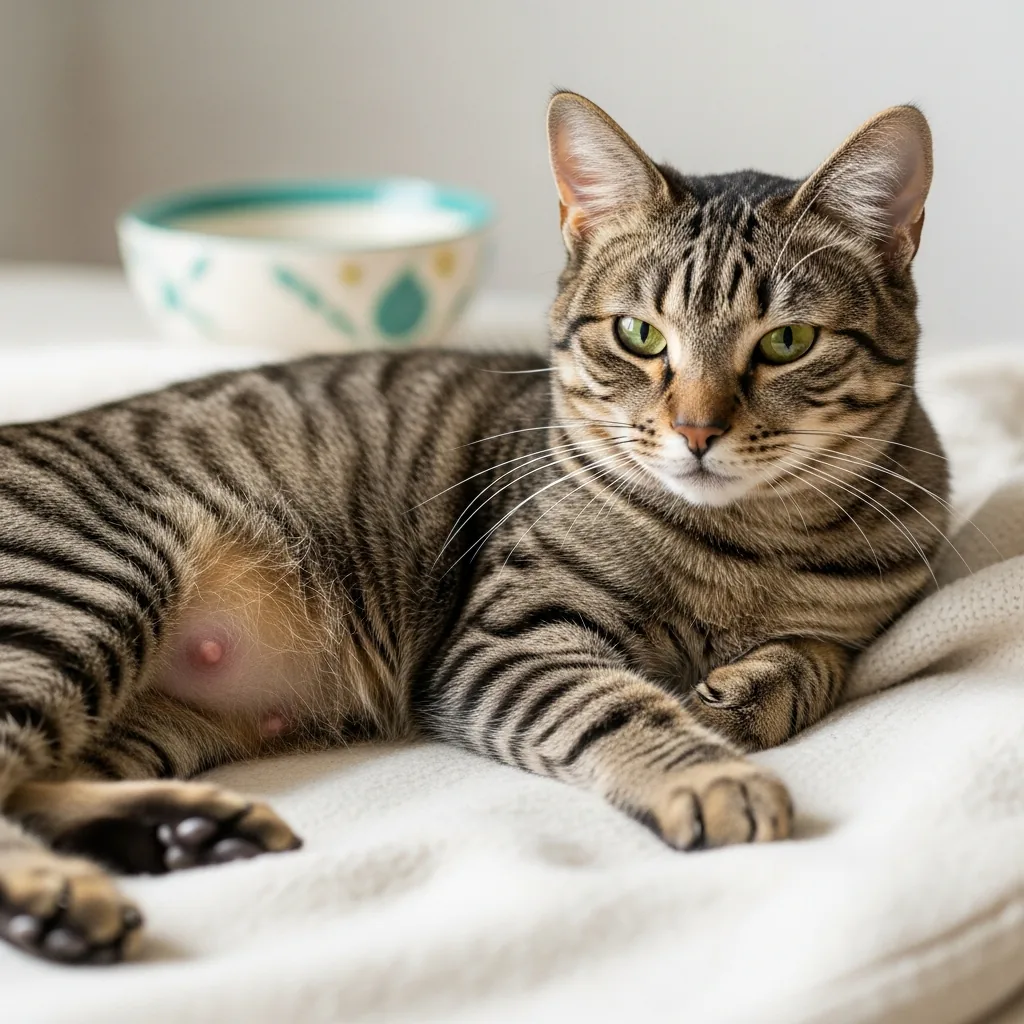
- One or more mammary glands are visibly swollen, hot to the touch, red, or appear significantly painful when your cat moves or is touched.
- Milk expressed from the nipple is discolored (pink, red, brown, or yellow), contains visible blood or pus, or has a foul odor.
- Your cat exhibits systemic signs of illness, such as lethargy, decreased appetite, vomiting, diarrhea, or fever (a rectal temperature above 103.5°F or 39.7°C).
- The skin over a mammary gland appears dark, bruised, or has open sores or ulcerations.
- An abscess is suspected (a firm, painful lump that may be draining pus).
- Kittens are refusing to nurse, are showing signs of weakness, or are not gaining weight appropriately, which could indicate issues with the mother’s milk quality or supply.
- Your cat is a senior or has pre-existing health conditions that could make her more vulnerable to complications.
The ASPCA emphasizes that recognizing emergencies is key to providing timely care. If you observe any of the ‘Call your vet now’ signs, do not delay in seeking professional help.
Step-by-Step Guide for Suspected Cat Mastitis
If you suspect your cat is developing cat mastitis, follow these steps to gather information and get her the care she needs. This process focuses on observation and preparation for a veterinary visit.
- Observe Mammary Glands: Gently examine each mammary gland. Note any swelling, redness, heat, or obvious pain. Compare them to each other and to how they normally look, if possible. Look for any changes in skin texture or color.
- Assess Milk Quality: If your cat is nursing, try to express a small amount of milk from each nipple onto a clean tissue or cotton ball. Observe the color and consistency. Look for discoloration (pink, red, brown, yellow), visible blood, pus, or a watery appearance. Note any unusual odor.
- Monitor Your Cat’s Behavior: Pay close attention to her overall demeanor. Is she lethargic, hiding, or showing signs of discomfort when moving? Is she vocalizing more than usual? Is she eating and drinking normally? Observe her interaction with her kittens; is she allowing them to nurse, or is she rejecting them?
- Check Kitten Health: If your cat is nursing, monitor the kittens closely. Are they active, vocal, and nursing well? Are they gaining weight appropriately? Any lethargy, weakness, or lack of weight gain in the kittens could be a sign of a problem with the mother’s milk.
- Document Your Findings: Write down all your observations, including the date and time. Note specific details: ‘left rear gland is hot and swollen,’ ‘milk from right front is pinkish,’ ‘cat is hiding under the bed and seems reluctant to move.’ This detailed record will be invaluable for your veterinarian.
- Contact Your Veterinarian: Call your vet’s office immediately, especially if you observe any ‘Call your vet now’ signs. Describe your observations clearly and concisely. Follow their instructions regarding bringing your cat in for an appointment. Be prepared to mention if your cat is nursing and the age of the kittens, as this impacts treatment decisions.
- Prepare for the Visit: If instructed to bring your cat in, prepare a comfortable, secure carrier. If she has kittens, ask your vet if it’s appropriate to bring them or if you should leave them at home. Having a clear history of your observations will help the veterinarian make a swift and accurate diagnosis.
Following these steps helps ensure you provide your vet with the necessary information for effective treatment, as detailed by the Cornell Feline Health regarding diagnostic procedures.
Common Misconceptions About Cat Mastitis
Myth: Mastitis only affects cats who are currently nursing.
Reality: While cat mastitis is most common in lactating queens, it can occur in non-nursing or spayed cats. This can happen due to hormonal imbalances, mammary gland hyperplasia (abnormal enlargement), or even mammary tumors that become infected. The underlying cause may differ, but the inflammation and infection process can still occur.
Myth: A cat with mastitis can be treated at home with over-the-counter remedies like warm compresses.
Reality: While supportive care such as warm compresses can offer some comfort, they are not a cure for mastitis. The condition is often caused by a bacterial infection requiring prescription antibiotics. Relying solely on home care without veterinary intervention can lead to worsening infection, abscess formation, and severe systemic illness, potentially endangering your cat’s life.
Myth: If kittens are still nursing, it’s always best to let them continue, even if the mother has mastitis.
Reality: This depends heavily on the severity of the mother’s condition and the type of infection. If the mother is severely ill or the milk is contaminated with dangerous bacteria, nursing could harm the kittens. Conversely, if the infection is mild and the mother tolerates it, continued nursing can help drain infected milk. This decision must be made in consultation with your veterinarian.
Myth: Mastitis is always a straightforward infection that resolves quickly with a short course of antibiotics.
Reality: While many cases respond well to antibiotics, some can be complicated. Severe infections may require longer treatment durations (several weeks), surgical intervention for abscesses or necrotic tissue, and intensive supportive care. The specific bacteria involved and the cat’s overall health status influence the treatment duration and complexity, as noted by the PubMed study on Klebsiella mastitis.
What to Track for Cat Mastitis
Accurate observation is key when monitoring your cat for signs of cat mastitis. Keeping a log of these details will provide your veterinarian with crucial information for diagnosis and treatment.
- Mammary Gland Appearance: Note any changes in size, shape, color (redness, bruising, dark discoloration), and temperature (warmth to the touch) for each gland.
- Milk Consistency and Color: Observe if the milk appears normal (white/creamy), watery, thick, or contains visible blood, pus, or clots. Record any unusual odors.
- Pain Response: Document if your cat vocalizes, flinches, or shows aggression when her mammary glands are touched or when she moves.
- Appetite and Hydration: Track if your cat’s food intake has decreased or if she is drinking more or less water than usual.
- Lethargy and Activity Levels: Note any significant decrease in energy, increased sleeping, hiding, or reluctance to move or groom.
- Interaction with Kittens: Observe if she is allowing kittens to nurse, if she seems to be guarding certain glands, or if she is actively rejecting them.
- Kitten Well-being: Monitor kittens for signs of poor nutrition, dehydration, lethargy, or diarrhea, which can indicate issues with the mother’s milk.
- Presence of Fever: If possible and safe to do so, take your cat’s temperature. A rectal temperature above 103.5°F (39.7°C) indicates fever.
- Any Signs of Abscess: Look for firm, painful swellings that may be draining pus or have open wounds on the skin.
- Duration of Symptoms: Record how long specific signs have been present, from a few hours to several days.
This detailed tracking helps your vet understand the progression and severity of the condition, a process supported by diagnostic guidelines from institutions like the PubMed abstract on feline mastitis.
Frequently Asked Questions About Cat Mastitis
Can a spayed cat get mastitis?
Yes, a spayed cat can develop mastitis, though it is less common than in intact, lactating cats. This can occur due to hormonal fluctuations, residual ovarian tissue, mammary gland hyperplasia, or infections associated with mammary tumors. Any swelling or discharge from the nipples of a spayed cat warrants veterinary investigation.
How long does it take for a cat to recover from mastitis?
Recovery time varies depending on the severity of the infection and the promptness of treatment. Mild cases treated early with antibiotics may show improvement within a few days and resolve within one to two weeks. More severe cases, especially those involving abscesses or systemic illness, can take several weeks to fully recover and may require ongoing supportive care.
What are the symptoms of mastitis in cats?
Key symptoms include swollen, red, hot, and painful mammary glands. The milk may be discolored (pink, bloody, or pus-like) or have an abnormal consistency and odor. Systemic signs like lethargy, fever, decreased appetite, and vomiting can also occur. Kittens may refuse to nurse or show poor growth.
Is cat mastitis contagious to kittens or other cats?
Mastitis is typically caused by bacteria that are normally present in the environment or on the cat’s skin. While the bacteria themselves can be present, the condition of mastitis is an inflammatory response rather than a highly contagious disease like a virus. However, maintaining strict hygiene is crucial to prevent secondary infections and spread of bacteria in the environment, especially for vulnerable kittens.
Can mastitis cause permanent damage to my cat?
In severe or untreated cases, mastitis can lead to permanent damage. This may include the formation of abscesses that require surgical removal of affected tissue, scarring of the mammary glands, or even loss of teat function. Chronic inflammation or repeated infections can also impact overall health. Prompt veterinary treatment aims to prevent these long-term complications.
What is the role of Klebsiella in feline mastitis?
Klebsiella is a bacterium that can cause mastitis in cats, as highlighted by research from institutions like the Cornell Feline Health. It is often associated with environmental contamination and can lead to severe infections. Understanding the specific bacterial cause through culture and sensitivity testing is crucial for selecting the most effective antibiotic treatment.
Should I continue nursing if my cat has mastitis?
This is a decision that must be made with your veterinarian. If the mastitis is mild and the mother is not systemically ill, continued nursing can help drain infected milk. However, if the mother is very sick, the milk is contaminated, or she is in too much pain, nursing should be stopped. The vet will weigh the risks and benefits for both the mother and the kittens.
Conclusion: Prioritizing Your Cat’s Mammary Health
Recognizing and understanding cat mastitis is a critical aspect of responsible cat ownership, particularly for those with breeding or recently-birthed females. The condition can cause significant pain and lead to serious complications if not managed promptly. By familiarizing yourself with the signs, knowing when to monitor and when to seek immediate veterinary care, and diligently tracking relevant symptoms, you play an active role in your cat’s health.
Remember, this guide provides information based on veterinary expertise, but it is not a substitute for professional medical advice. Always consult your veterinarian for any health concerns. They are your best resource for accurate diagnosis, appropriate treatment, and ensuring your cat receives the highest standard of care for mastitis and any other health issues.